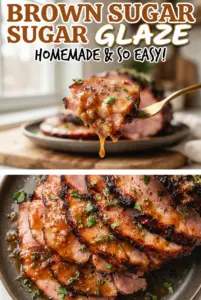
Brown sugar ham glaze turns a good holiday ham into the kind of centerpiece people keep going back to with a second slice in hand. It sets up into a glossy coating that clings to the ridges of a scored ham, with just enough sweetness to balance the salt and enough acidity to keep it from tasting flat. The finish is sticky, lacquered, and full of that warm, old-school glaze flavor that works just as well for a Sunday dinner as it does for a holiday table.
The trick is getting the glaze to simmer long enough to dissolve the sugar and lightly thicken, but not long enough to cook it down into a hard candy shell. Brown sugar gives the body, honey helps it cling, and Dijon brings a sharp edge that keeps the whole thing from leaning cloying. Pineapple or orange juice adds brightness and a little fruit depth, while butter smooths the texture so it brushes on evenly.
Below, I’ll show you how to keep the glaze glossy instead of grainy, which substitute works best if you’re out of one ingredient, and how to rewarm any extra so you can spoon it over sliced ham at the table.
The glaze thickened up in just a few minutes and brushed on like a dream. It stayed glossy on the ham instead of running off, and the mix of orange juice and Dijon gave it a great balance.
Keep this brown sugar ham glaze handy for a glossy ham finish with honey, Dijon, and warm spice.
The Secret to a Glaze That Clings Instead of Sliding Off
The biggest mistake with ham glaze is stopping the simmer too soon. If the sugar hasn’t fully dissolved, the glaze can turn sandy on the ham instead of smooth and shiny. If it’s cooked too long, it gets sticky in the pan but tightens up too much on the meat, and you lose that brushable texture that makes repeated glazing possible.
This version works because it starts with a balanced mix of sugar, honey, and juice. The honey gives the glaze body, the juice loosens the sweetness and keeps it pourable, and the vinegar wakes everything up just enough that the finished glaze tastes layered instead of one-note. Brush it on during the last 30 minutes so it can thicken on the surface without scorching.
What Each Ingredient Is Doing in This Ham Glaze
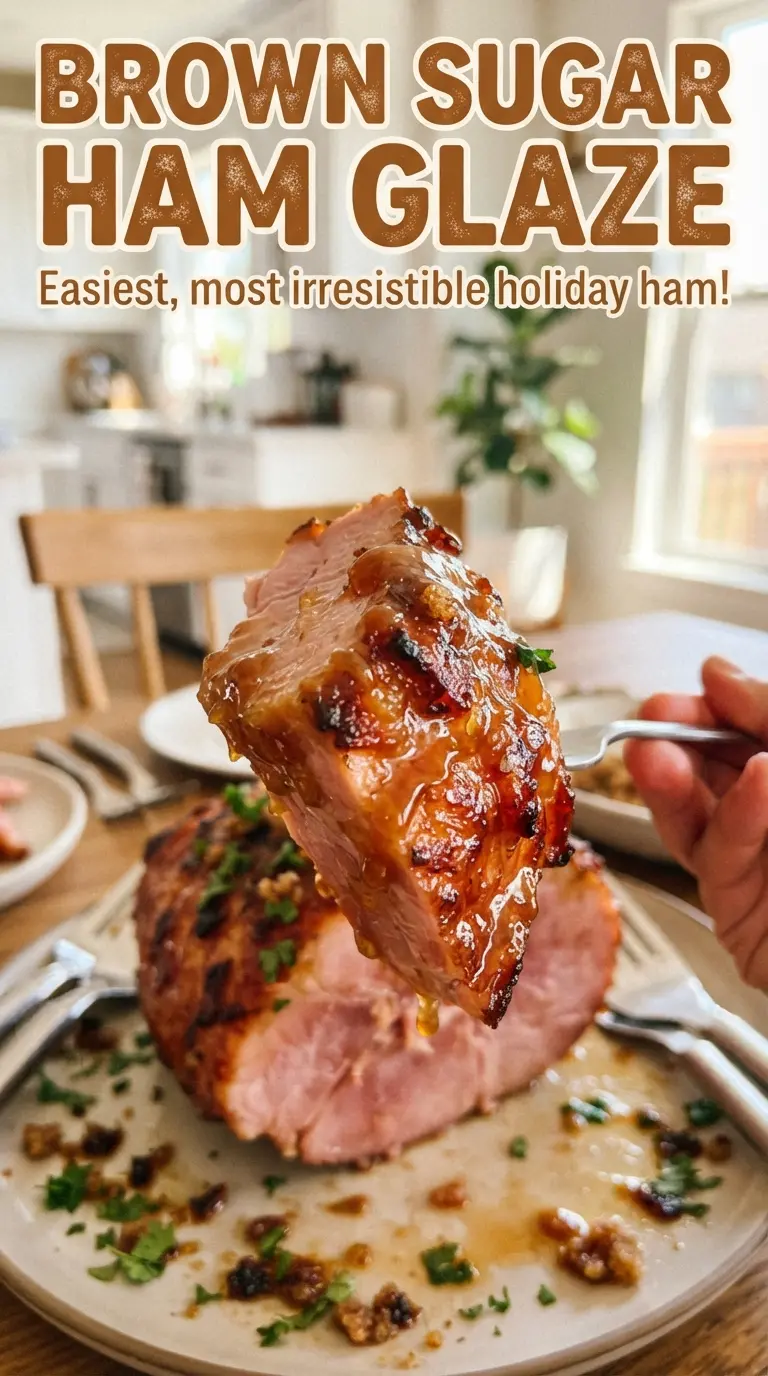
- Brown sugar — This is the backbone of the glaze. Pack it firmly so you get the right thickness and a deep caramel note as it warms.
- Honey — Honey helps the glaze cling to the ham and gives it that glossy, lacquered finish. Maple syrup can work in a pinch, but it reads a little less classic and a little more earthy.
- Pineapple or orange juice — Either one adds acidity and fruit brightness. Pineapple tastes a little more traditional on ham; orange is softer and slightly more fragrant.
- Dijon mustard — This keeps the glaze from tasting flat. It doesn’t make the glaze taste mustardy; it just sharpens the sweetness and helps the flavor read as savory-sweet instead of candy-like.
- Butter — Butter rounds out the glaze and helps it brush on smoothly. If you skip it, the glaze still works, but it won’t have the same silkier texture.
- Apple cider vinegar — The small amount of vinegar matters more than it looks like it should. It lifts the sweetness and keeps the glaze from tasting heavy once it hits the salty ham.
- Cinnamon and cloves — These are the warm background notes that make the glaze taste complete. Cloves are strong, so keep the measure light; too much and the whole glaze can go medicinal.
Building the Glaze So It Stays Glossy on the Ham
Melting the sugar base
Add everything to a saucepan and bring it up over medium heat, stirring often. You want the sugar fully dissolved before the glaze starts to boil, because undissolved granules can leave the finished glaze gritty. The mixture should look smooth and unified before it ever reaches a real simmer.
Watching for the right thickness
Let the glaze simmer for 3 to 4 minutes, just until it turns slightly thicker and looks glossy and a little syrupy. It should coat the back of a spoon, but still move easily when you tilt the pan. If it goes too far, it will seize up as it cools and won’t brush well over the ham.
Brushing during the final stretch
Brush the glaze over a fully cooked ham during the last 30 minutes of baking, then repeat every 10 minutes. That timing lets each layer set into a shiny coat without burning the sugar on the surface. If the oven is too hot or the glaze starts darkening too fast, tent the ham loosely with foil and keep going with the remaining glaze.
Serving the extra glaze
Warm any leftover glaze and spoon it over sliced ham at the table. It thickens as it sits, so a brief rewarm brings it back to a pourable consistency. Don’t let it boil hard again or it can turn sticky and too thick to drizzle cleanly.
Three Ways to Adapt This Glaze Without Losing the Balance
Pineapple Juice for the Classic Holiday Taste
Use pineapple juice if you want the glaze to taste brighter and more old-fashioned on ham. It has a little more tang than orange juice and gives the glaze a sharper fruit note that stands up well to smoky or salty meat.
Orange Juice for a Softer Citrus Finish
Orange juice makes the glaze a little rounder and less punchy. It’s the better swap if you want something gentler and slightly more fragrant, especially for a milder ham or when you’re serving people who prefer less acidity.
Dairy-Free Glaze
Leave out the butter and the glaze will still work. It won’t have quite the same silky finish, but the sugar, honey, and juice still reduce into a glossy coating that clings well to the ham.
Sweeter or Sharper Finish
For a sweeter glaze, cut the Dijon slightly and lean on orange juice. For a sharper glaze, add a touch more vinegar or mustard. The balance changes fast here, so small adjustments matter more than big ones.
Storage and Reheating
- Refrigerator: Store leftover glaze in an airtight container for up to 1 week. It will thicken as it chills.
- Freezer: It freezes fine for about 2 months in a sealed container. Thaw it in the fridge before reheating.
- Reheating: Warm it gently over low heat with a splash of water or juice if needed. Don’t boil it hard again, or it can become overly sticky and lose its brushable texture.
Questions I Get Asked About This Recipe
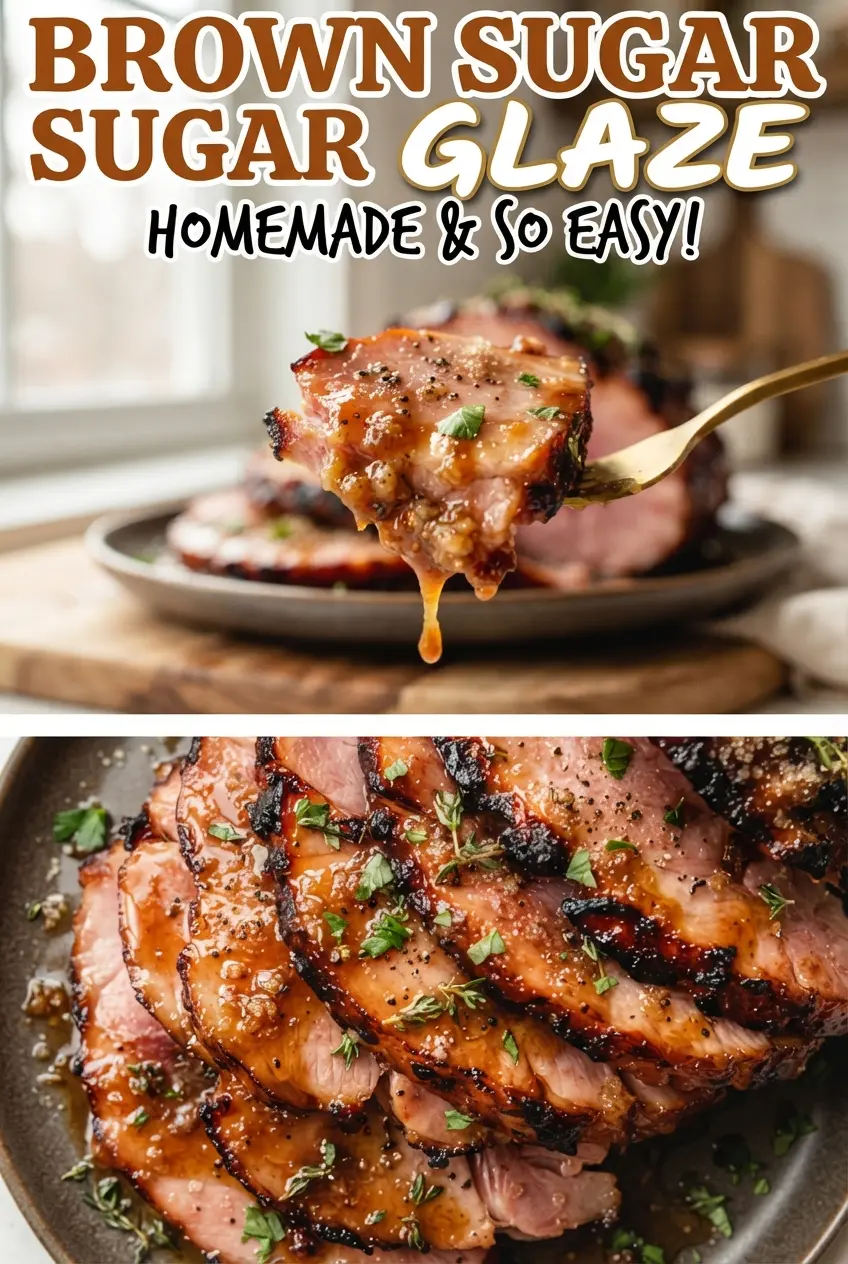
Brown Sugar Ham Glaze
Ingredients
Equipment
Method
- Combine brown sugar, honey, pineapple or orange juice, Dijon mustard, butter, apple cider vinegar, ground cinnamon, and ground cloves in a saucepan.
- Bring the mixture to a simmer over medium heat, stirring until the sugar dissolves and the surface starts to bubble.
- Simmer 3-4 minutes until slightly thickened and glossy, stirring occasionally so it coats the spoon.
- Brush the warm glaze over a fully cooked ham during the last 30 minutes of baking.
- Every 10 minutes, brush on another layer so the glaze keeps looking glossy over the scored diamond pattern.
- Spoon the remaining warm glaze over sliced ham at the table for extra shine and flavor.