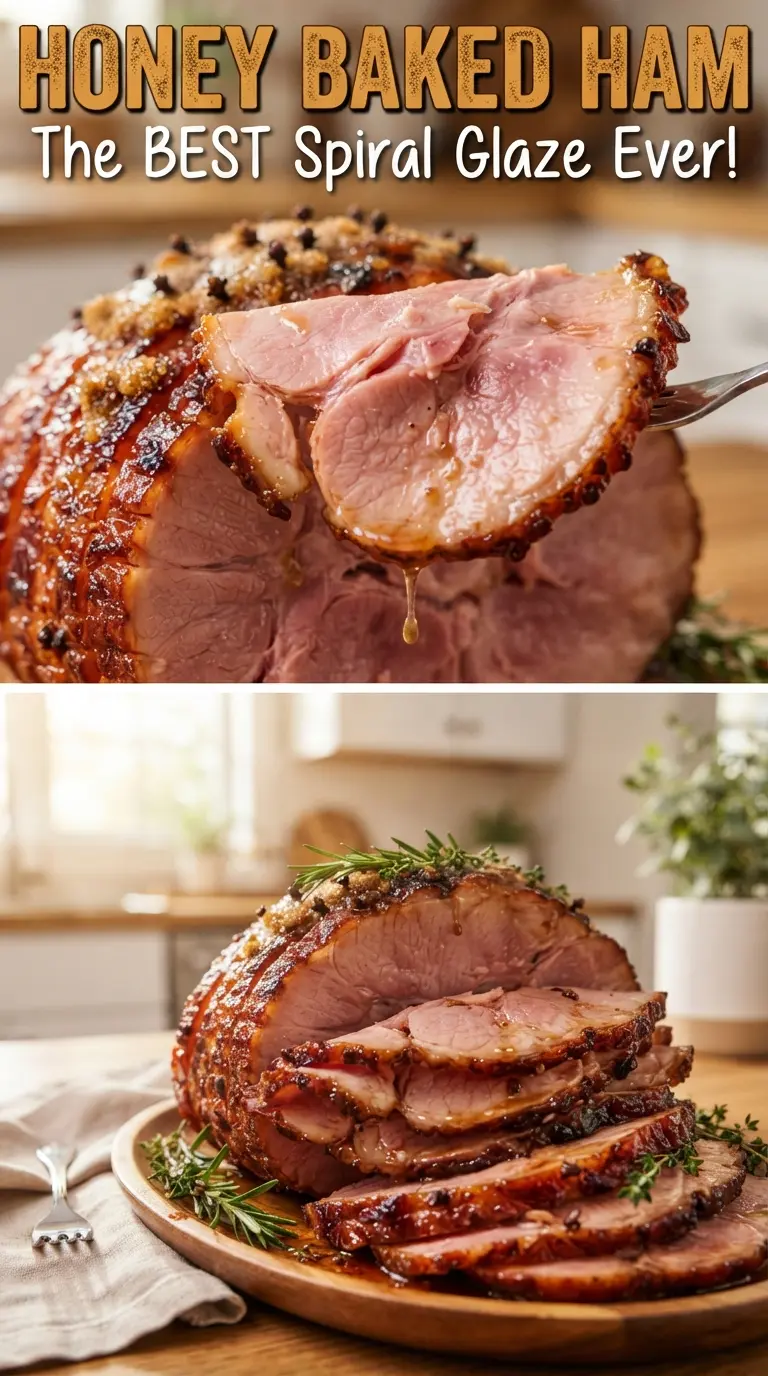
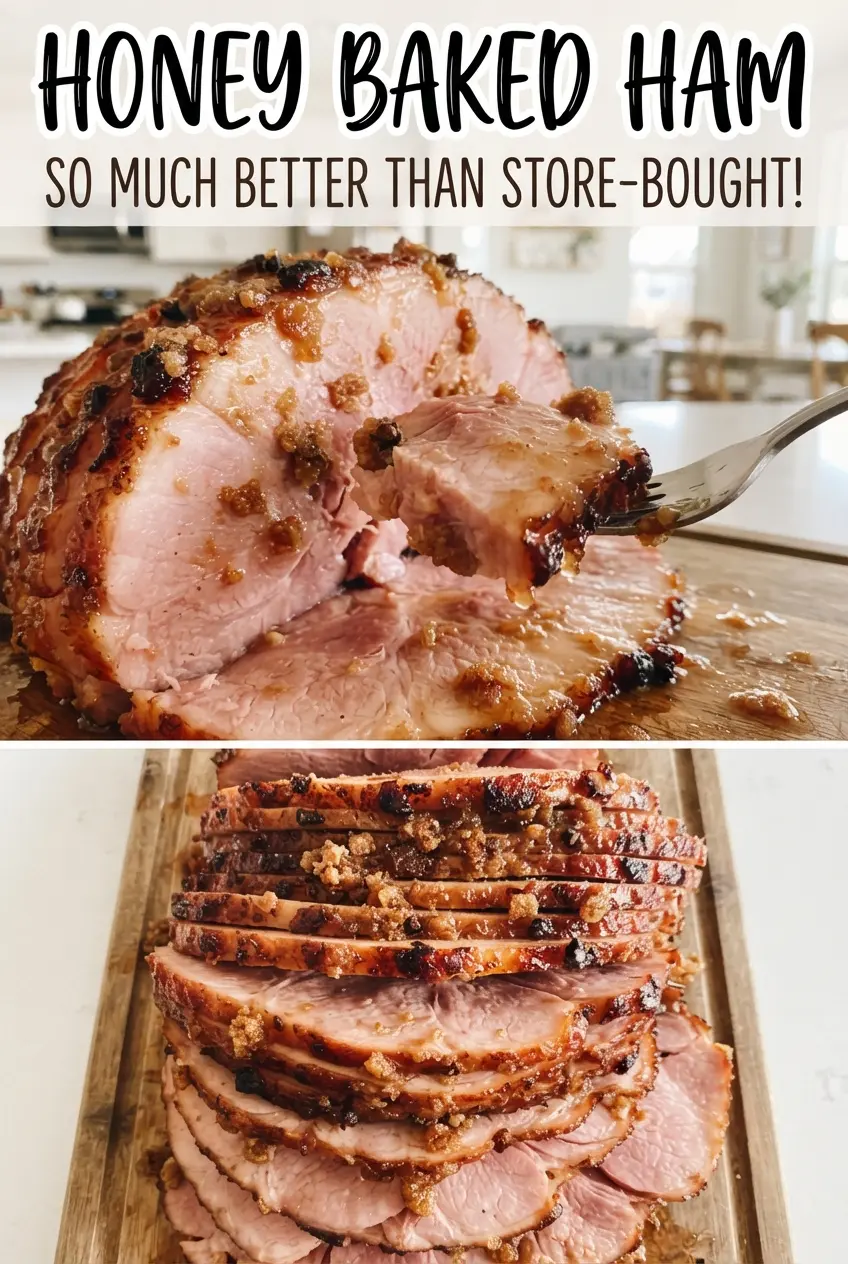
Honey baked ham earns its place at the center of the table because it delivers two things people want at once: juicy slices underneath and a crackly, caramelized crust on top. The glaze clings to the spiral cuts, so every slice gets a little sweet, buttery spice instead of one bland exterior that falls off at the first carve.
The trick is building the coating in layers. Warm honey and butter help the sugar stick, while the cinnamon, cloves, ginger, nutmeg, allspice, and paprika give the crust that familiar holiday-ham warmth without tasting flat or one-note. Baking the ham covered first keeps it moist, then the high-heat finish turns the sugar into a lacquered shell instead of a burnt mess.
Below, you’ll find the timing that keeps the ham from drying out, why the glaze needs to go on in more than one round, and what to do if you want the crust darker, spicier, or easier to carve.
The glaze set up into a crackly crust and the spiral slices stayed juicy all the way through. I followed the three rounds of brushing and it came out exactly like the deli-style ham I was hoping for.
Save this honey baked ham for the glazed centerpiece with a crackly spiced crust and juicy spiral slices.
The Secret to a Crackly Glaze Without Burning the Sugar
Most glazed hams fail at the finish. The oven is too hot for too long, or the sugar goes on all at once and melts into a thin syrup instead of setting into a crust. This version avoids both problems by warming the ham through first, then using short bursts of high heat to build the glaze in layers. That gives the sugar time to caramelize on the surface without turning bitter.
The spiral cuts help, but they also expose the ham to drying out if you rush the process. Keeping the ham covered for the first bake traps moisture and brings the center up gently. Once the foil comes off, the honey butter acts like glue for the spiced sugar, and the repeated brushing is what creates that lacquered, craggy top.
- Bone-in spiral-sliced ham — The bone adds flavor and helps the meat stay juicy. Spiral-sliced ham is the right choice here because the glaze slips between the slices, which gives you more surface area for caramelization than a whole unsliced ham.
- Honey — Honey gives the glaze its shine and helps it stick. A mild honey works best; anything too dark or strongly flavored can overpower the spices.
- Butter — Butter softens the honey so it brushes on smoothly and browns nicely in the oven. If you swap in all honey with no fat, the glaze tends to run off instead of coating the ham.
- Brown sugar and granulated sugar — The brown sugar brings depth and a little molasses note, while the white sugar helps the crust dry out and crackle. Using both gives you a better finish than either one alone.
What Each Ingredient Is Actually Doing in This Recipe
- Primary ingredient (the star) — Quality matters most. Choose the best you can find.
- Cooking medium (oil, butter, or broth) — This carries flavors and prevents dryness.
- Seasonings (salt, pepper, spices, herbs) — Layer flavors so nothing overpowers. Build depth gradually.
- Aromatics (garlic, onion, herbs) — Cook with fat to bloom flavors. Become the foundation.
- Supporting ingredients — Complement the main ingredient without overpowering it.
- Sauce or liquid (if applicable) — Brings flavors together. Balance richness with acid.
- Acid (lemon, vinegar, wine, or other) — Brightens and prevents flat-tasting results.
- Final finish (garnish, glaze, or sauce) — Prevents one-dimensional taste and adds visual appeal.
Building the Ham in Layers So the Crust Stays Stuck
Warming the Ham Gently First
Set the ham cut-side down in the roasting pan and cover it tightly with foil. The first bake is about bringing the meat up to temperature without losing moisture, so keep the oven at 325°F until the ham reaches 120°F inside. If the foil is loose, steam escapes and the edges dry out before the center is ready.
Making the Glaze Stick Instead of Slide Off
Melt the honey and butter together, then mix the sugars with the spices in a separate bowl. Brush on the honey butter first, then pat the spiced sugar over the surface so it has something to cling to. If you dump the sugar on before the fat goes down, it will fall into the pan instead of forming that glossy shell.
Using Short High-Heat Bursts for the Finish
Raise the oven to 400°F and bake for 5 minutes, then repeat the brushing and sugaring two more times. Those short rounds are what build the crust without scorching it. Watch for a deep amber color and a dry, crackly surface; if it starts to darken too fast, pull it out and let the residual heat finish the job.
Resting Before the First Slice
Let the ham rest for 15 minutes before serving. That pause keeps the juices in the meat instead of spilling onto the board the moment you carve. The crust stays intact better too, which matters when you want those caramelized edges to show on the platter.
How to Adapt This Glazed Ham for a Smaller Table or a Different Finish
Make it less sweet without losing the glaze
Cut the granulated sugar back by 1/4 cup and keep the brown sugar. You’ll get a darker, more molasses-forward crust that still sets up, but it won’t read as candy-sweet on the table.
Gluten-free as written
This recipe is naturally gluten-free as long as your ham and spices are certified gluten-free. That matters most with the spice blends and pre-cured hams, where hidden fillers sometimes show up.
Swap the spice profile for a warmer finish
If you want a softer spice note, reduce the cloves slightly and add a pinch of black pepper. The ham will still taste classic, but the finish lands a little less sweet and a little more savory.
Storage and Reheating
- Refrigerator: Store sliced ham in an airtight container for up to 4 days. The glaze will soften, but the flavor deepens overnight.
- Freezer: Freeze sliced ham tightly wrapped and packed flat for up to 2 months. Thaw it in the refrigerator so the slices stay intact and don’t turn stringy.
- Reheating: Reheat covered with a splash of water or pan juices at 300°F until just warmed through. High heat dries the slices fast and can harden the sugar crust, so keep the reheating gentle.
Answers to the Questions Worth Asking
Honey Baked Ham
Ingredients
Equipment
Method
- Preheat the oven to 325F, then place the ham cut-side down in a roasting pan and cover tightly with foil.
- Bake for 12-14 minutes per pound, until the ham reaches 120F inside.
- Melt the honey and butter together until smooth and pourable.
- In a separate bowl, mix the granulated sugar and brown sugar with the cinnamon, cloves, ginger, nutmeg, allspice, and paprika.
- Remove the foil, then brush the ham generously with the honey butter.
- Pat on a layer of the spiced sugar so the surface looks evenly coated.
- Raise the oven to 400F and bake for 5 minutes, until the surface starts to set and turn glossy.
- Brush again with the remaining honey butter, then pat on more spiced sugar.
- Bake another 5 minutes at 400F, repeating the glazed-and-sugared cycle until the crust is deep golden and crackly.
- Continue baking until the ham reaches 140F.
- Rest the ham for 15 minutes before serving so juices settle and slices stay clean.