Crock Pot Shipwreck Stew comes out thick, hearty, and layered with the kind of everyday ingredients that turn into something bigger than the sum of their parts. The potatoes go tender without falling apart, the beef seasons the whole pot, and the rice finishes in the tomato broth until it takes on a soft, almost creamy body. A handful of cheddar at the end melts into the top and gives each bowl a rich, salty finish that keeps people coming back for seconds.
This version works because the layering isn’t random. Browning the beef first builds flavor you can’t get from dumping raw meat straight into the crock pot, and slicing the potatoes thin keeps them on the same timing as the rice instead of leaving you with hard chunks at the bottom. The tomato soup also helps the broth cling to everything, which is part of why this stew eats like a full meal instead of a thin soup.
Below, I’ll walk through the part that matters most: how to keep the rice tender, not mushy, and how to layer the pot so the stew cooks evenly from top to bottom. There’s also a simple swap guide if you want to adjust what goes into the pot without throwing off the texture.
The potatoes stayed tender, the rice cooked through without turning gummy, and the cheddar on top melted into the broth just enough to make every bowl taste richer.
Save this Crock Pot Shipwreck Stew for the nights when you want a layered beef-and-potato dinner that cooks low and slow with almost no hands-on work.
The Layer Order That Keeps This Stew from Turning Muddy
Shipwreck stew can go flat fast if everything is dumped in and stirred together before the slow cooker gets a chance to work. The trick is to keep the potatoes, beef, beans, rice, and celery in distinct layers so the rice absorbs broth gradually instead of clumping, and the potatoes soften without disintegrating into the base. That gives you a stew with body instead of a thick, overworked mash.
The other place people run into trouble is moisture balance. Tomato soup and diced tomatoes bring plenty of liquid, but the potatoes and rice both drink some of it up as they cook. That means the broth should look loose when it goes in; if it seems already thick in the crock, the finished stew can turn dry by the time the rice is done.
What the Potatoes, Rice, and Tomato Soup Are Doing Here
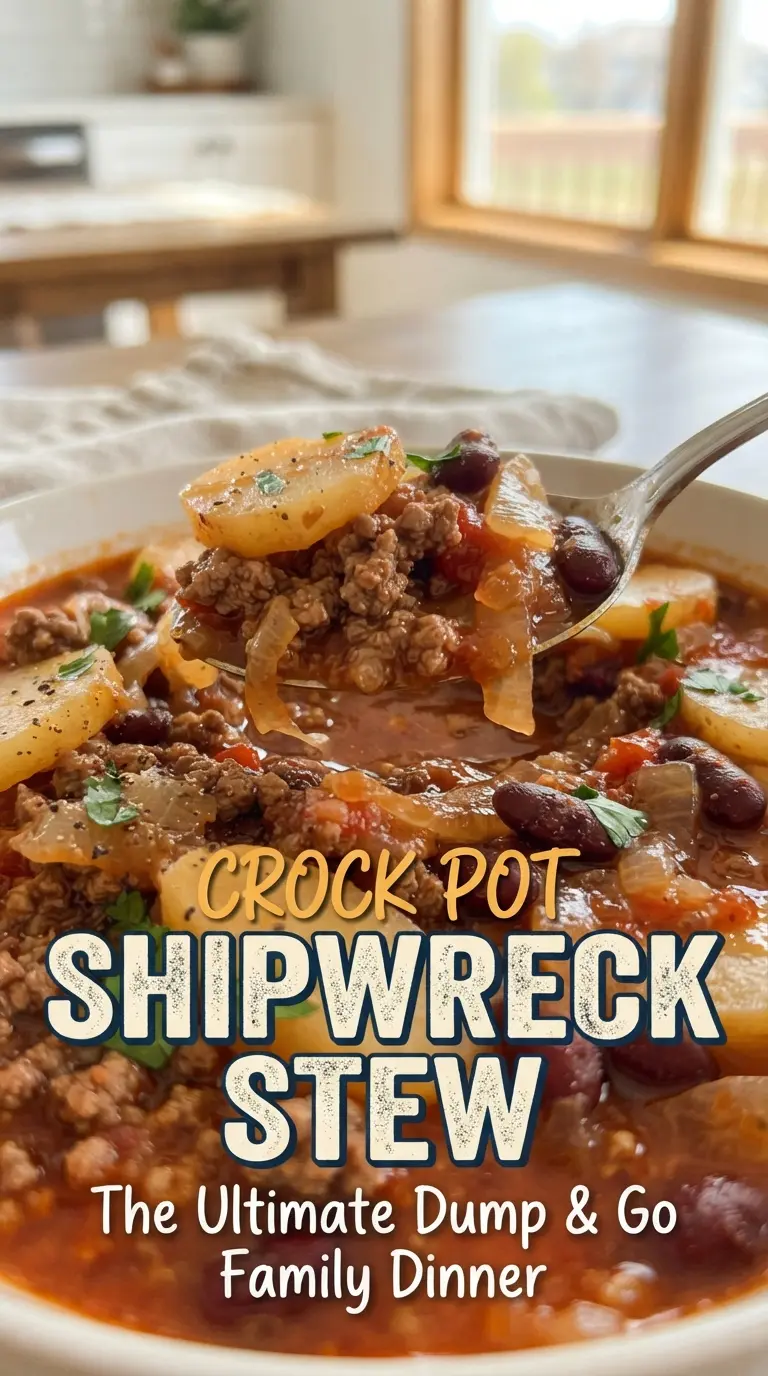
- Potatoes — Thin slices are important because they cook at the same pace as the rice. Waxy potatoes hold their shape a little better, but russets work fine if that’s what you have; just slice them evenly so the thinner pieces don’t vanish while the thicker ones stay firm.
- Ground beef — Browning it first gives the stew its savory base. If you skip that step, the meat can taste flat and the crock pot broth won’t have the same depth.
- Tomato soup — This is what gives the stew its thicker, smoother body. You can swap in another condensed tomato-based soup in a pinch, but plain tomato sauce won’t behave the same way and usually leaves the broth thinner and sharper.
- Long-grain white rice — It cooks up tender without getting as sticky as short-grain rice would. Brown rice needs a much longer cook time and changes the texture of the whole dish, so it’s not a direct swap here.
- Cheddar — Add it at the end, after the heat is off high action and the stew has stopped bubbling hard. If it goes in too early, it can separate and turn stringy instead of melting into a smooth top.
Building the Crock Pot So the Rice Finishes at the Same Time as the Potatoes
Browning the Beef First
Cook the beef with the onion until the meat loses its raw color and the onion turns soft and translucent, then add the garlic for just a short burst. That last 30 seconds matters because garlic burns quickly and turns bitter if it sits in the pan too long. Drain the excess fat if there’s a lot in the skillet; too much grease can leave the finished stew slick on top.
Layering Without Stirring
Spread the potatoes across the bottom of the crock pot, then add the beef mixture, beans, rice, and celery in that order. Don’t stir after the broth goes in, because stirring at this point sends rice to the bottom where it can clump and stick while the potatoes on top stay too firm. The goal is even heat and slow hydration, not a uniform mixture from the start.
Adding the Broth Mixture
Whisk the tomato soup, diced tomatoes, broth, chili powder, salt, and pepper until the soup loosens completely, then pour it evenly over the layered ingredients. You want the liquid to reach into the edges and corners of the pot, not sit in one spot. If the broth looks barely enough at first, trust the process; the vegetables and rice release and absorb moisture as they cook.
Knowing When It’s Done
Cook on LOW until the potatoes are tender when pierced and the rice no longer has a chalky center. If the rice is done but the potatoes still resist, the slices were cut too thick. If the potatoes are soft but the rice is still firm, your cooker runs cool and the stew needed a little more time under the lid.
How to Adjust Shipwreck Stew Without Losing the Texture
Make It Dairy-Free at the Finish
Skip the cheddar or use a dairy-free shredded alternative that melts well. The stew itself stays hearty and complete without cheese, and leaving it off keeps the broth a little cleaner and more tomato-forward.
Swap the Beef for Ground Turkey
Ground turkey works, but it needs the onion, garlic, and chili powder to carry more of the flavor load. Use a little oil in the skillet if the turkey is very lean, or it can taste dry once the stew finishes cooking.
Use Brown Rice Only If You Add Time
Brown rice won’t finish on the same schedule as white rice. If you want it, plan for a longer cook and expect the potatoes to soften more, because the stew has to stay in the crock pot until the grains are tender.
Add More Vegetables Without Diluting It
Diced carrots or frozen corn fit in well, but add them in moderation so the stew doesn’t lose its thick, layered feel. Extra watery vegetables like zucchini soften too fast and can make the broth looser than it should be.
Storage and Reheating
- Refrigerator: Store in an airtight container for up to 4 days. The rice will keep soaking up liquid, so expect the stew to thicken as it sits.
- Freezer: It freezes well for up to 2 months, though the potatoes soften a bit after thawing. Cool it completely before freezing and leave a little headspace in the container.
- Reheating: Warm it gently on the stove or in the microwave with a splash of broth if needed. High heat can make the rice bloated and the potatoes break apart, so reheat slowly until just hot.
Questions I Get Asked About This Stew
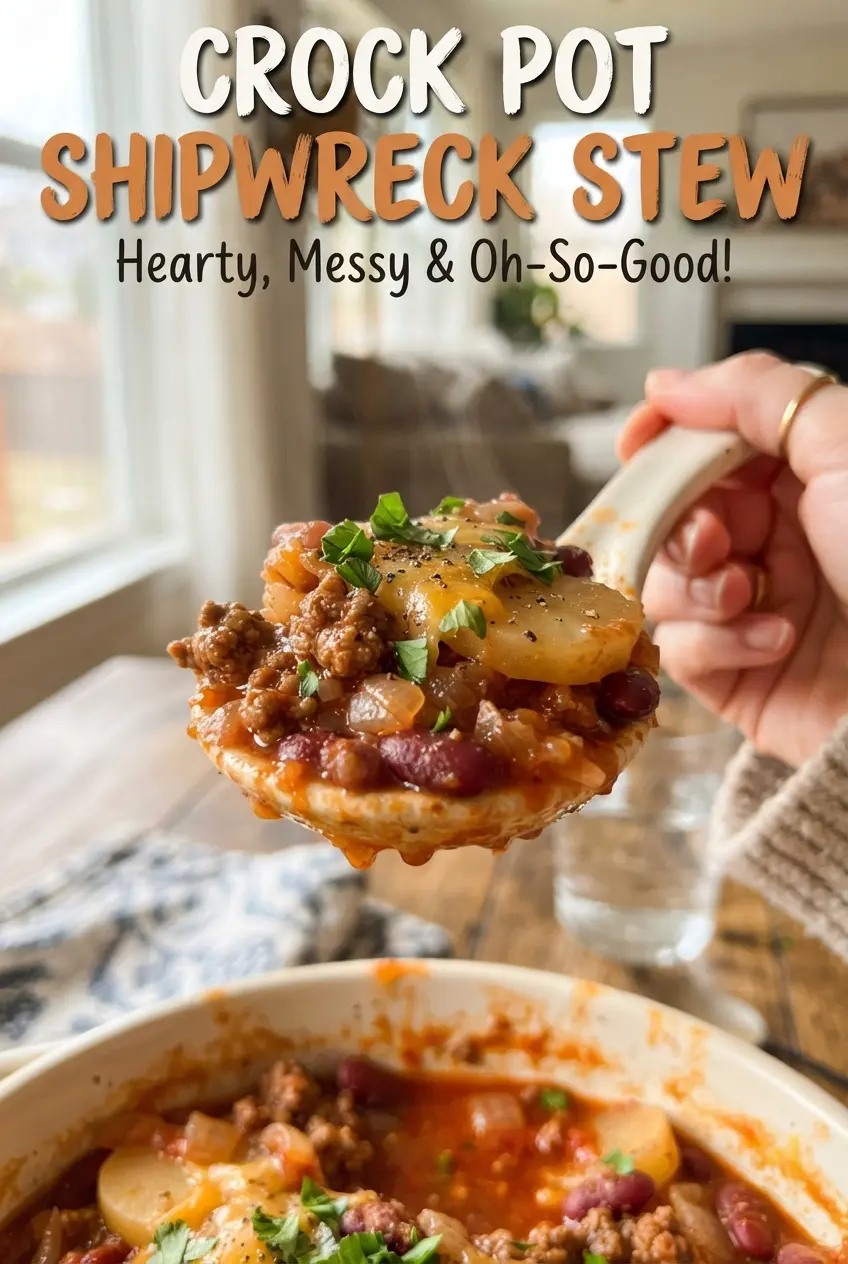
Crock Pot Shipwreck Stew
Ingredients
Equipment
Method
- Brown the ground beef with the diced onion for 8 minutes, stirring often, until the beef is no longer pink and the onion is softened (medium-high heat). Drain any excess fat, then add the minced garlic and cook for 30 seconds, just until fragrant.
- Layer the thinly sliced potatoes, the browned beef mixture, the drained kidney beans, the uncooked long-grain white rice, and the sliced celery in the crock pot in that order.
- Whisk together the tomato soup, diced tomatoes, beef broth, chili powder, salt, and black pepper until smooth, then pour it over the layered ingredients to distribute evenly.
- Cover and cook on LOW for 6-7 hours, until the potatoes and rice are tender and the mixture looks thickened and cohesive.
- Stir gently just to combine without breaking up the potatoes, then sprinkle the shredded cheddar over the top in an even layer.
- Cover and cook for 10 minutes on LOW until the cheese is melted and slightly bubbly at the edges, then serve hot.