Slow cooker beef stew and dumplings gives you the kind of supper that tastes like it’s been tended to all day, because it has. The beef turns fork-tender, the vegetables soak up a rich broth, and the dumplings steam on top into soft, fluffy lids with golden edges. It’s hearty without being heavy, and once the dumplings go on, the whole pot feels complete.
The trick is building enough flavor before the slow cooker does the long work. Browning the beef first gives you a deeper base, and that little bit of flour helps the stew thicken as it cooks instead of staying thin and brothy. Tomato paste and Worcestershire add the kind of savory depth that makes the gravy taste like it simmered far longer than it actually did.
Below, I’ve included the small details that matter most: how to keep the dumplings light, why you should resist lifting the lid, and a few easy swaps if you need to work with what’s already in the kitchen.
The dumplings stayed fluffy on top and the stew thickened into a proper gravy. I’ve made plenty of slow cooker beef stews, but this was the first one where the potatoes held their shape and the broth tasted finished without any extra fuss.
Save this slow cooker beef stew and dumplings for a hands-off dinner with tender beef, thick gravy, and fluffy herb dumplings on top.
The Reason the Stew Thickens Instead of Staying Watery
The biggest mistake with slow cooker beef stew is assuming the broth will reduce the way it would on the stovetop. In a slow cooker, steam has nowhere to go, so liquid stays put unless you build thickness from the start. That’s why the flour on the beef matters. It coats the meat, helps it brown better, and gives the broth a head start toward a gravy-like finish.
The other detail that changes everything is the tomato paste. It doesn’t make the stew taste like tomato; it deepens the base and gives the broth a richer color and a rounder, fuller taste. Worcestershire does the same job in a different way, adding the savory edge that keeps the stew from tasting flat after eight hours.
- Beef chuck — This is the cut you want because the connective tissue melts down during the long cook. Leaner beef gets dry before it gets tender.
- Flour — It’s doing more than coating the meat. It helps the stew thicken naturally as the liquid cooks around it. All-purpose flour is the right choice here.
- Tomato paste — A small amount creates depth without turning the stew tomato-forward. If you skip it, the broth tastes less finished.
- Baby potatoes — They hold their shape better than diced russets. If you only have russets, cut them large so they don’t collapse into the broth.
What the Dumpling Batter Needs to Stay Tender on Top
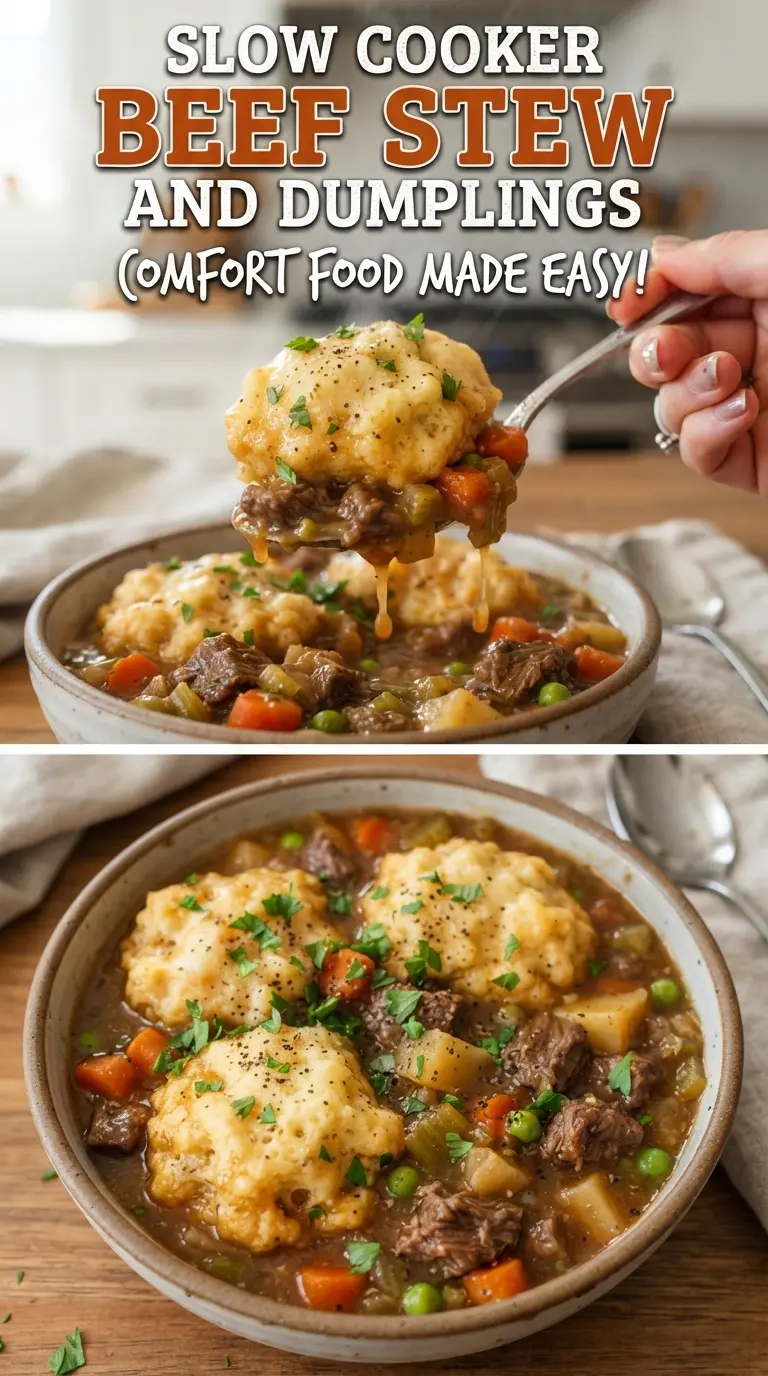
The dumplings are built from Bisquick because it gives you a reliable, soft dough without extra measuring or overthinking. Milk loosens the mix just enough to drop by spoonfuls, and the parsley adds a little freshness so the topping doesn’t taste one-note. If the dough looks dry and shaggy, that’s right. If it pours like batter, it’s too loose and the dumplings will spread instead of steaming into mounds.
The stew needs to be at a steady hot simmer before the dumplings go on. If the liquid isn’t hot enough, the tops cook slowly and turn gummy before the centers set. Keep the lid on after they’re added. Every time you lift it, you let out the steam that cooks them through.
- Bisquick baking mix — It’s the easiest way to get consistent dumplings. A homemade biscuit dough can work, but it needs to be soft and quick-mixed or it turns tough.
- Milk — Whole milk gives the richest result, but 2% works. Almond milk is not my first choice here because the dumplings lose some body.
- Fresh parsley — Use fresh if you can. Dried parsley won’t bring the same color or clean finish to the dough.
Building the Pot in the Right Order
Coating and Browning the Beef
Toss the beef with flour, salt, and pepper until every piece is lightly dusted, then brown it in hot oil in batches if needed. You’re looking for deep brown edges, not gray meat with a little color. If the pan is crowded, the beef steams and never develops the savory crust that gives the stew its backbone.
Loading the Slow Cooker
Add the browned beef, onion, garlic, tomato paste, broth, Worcestershire, carrots, celery, potatoes, and thyme to the slow cooker. Stir once to spread the tomato paste through the liquid, then stop. The vegetables need to sit in the broth, not get mashed around, or the potatoes can break up before the beef is tender.
Letting Time Do the Work
Cook on LOW for 8 hours until the beef gives easily when pressed with a spoon. The stew should look thickened and glossy, with the carrots soft and the potatoes cooked through but still intact. If the beef is still chewy, it needs more time, not more heat.
Dropping the Dumplings
Turn the slow cooker to HIGH and stir together the Bisquick, milk, and parsley until you get a soft dough. Drop tablespoon-sized portions over the hot stew, spacing them a little apart so they can expand. Cover and cook for 30 to 35 minutes without lifting the lid. When they’re done, the tops will look set and slightly springy, and a toothpick inserted into the center of one should come out without wet batter.
How to Adapt It When You Need a Different Kind of Supper
Gluten-Free Version
Use a gluten-free all-purpose flour blend to coat the beef, then swap in a gluten-free baking mix for the dumplings. The stew itself keeps the same shape and flavor, but the dumplings may be a little more delicate, so keep the lid closed until the timer is up.
Dairy-Free Dumplings
Use an unsweetened plain non-dairy milk with enough body to mix into a soft dough. Oat milk works better than almond milk here because it gives the dumplings a little more tenderness and doesn’t taste thin.
Vegetable Swaps
If you want more vegetables, add parsnips or mushrooms with the carrots and celery. Mushrooms deepen the stew in a meaty way, while parsnips add a gentle sweetness that works well with the thyme and Worcestershire.
Storage and Reheating
- Refrigerator: Store leftovers for up to 4 days. The dumplings soften as they sit, but the flavor gets even deeper.
- Freezer: The stew freezes well, but the dumplings don’t keep their best texture. Freeze the stew on its own if you want the cleanest result later.
- Reheating: Warm gently on the stovetop or in the microwave until hot all the way through. Don’t boil it hard, or the beef tightens up and the dumplings turn dense.
Answers to the Questions Worth Asking
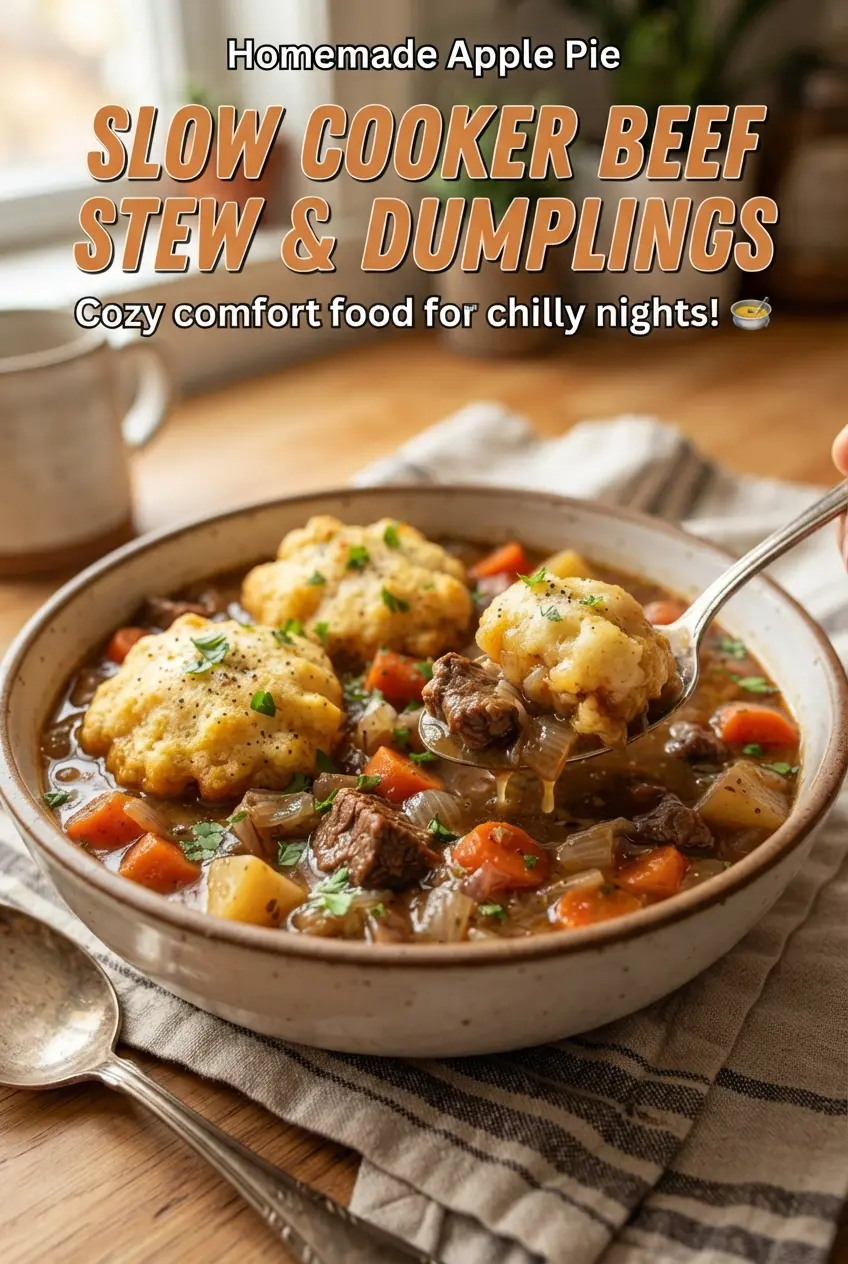
Slow Cooker Beef Stew and Dumplings
Ingredients
Equipment
Method
- Toss the beef with flour, salt, and black pepper until evenly coated. Heat olive oil in a cast iron skillet over medium-high, then brown the beef and transfer it to the slow cooker.
- Add onion, garlic, tomato paste, beef broth, Worcestershire sauce, carrots, celery, baby potatoes, and dried thyme to the slow cooker. Cover and cook on LOW for 8 hours, until the beef is tender.
- Turn the slow cooker to HIGH. Stir Bisquick baking mix, milk, and fresh parsley into a soft dough.
- Drop tablespoons of dumpling dough over the hot stew, keeping them spaced. Cover and cook on HIGH for 30-35 minutes without lifting the lid, until the dumplings are cooked through.