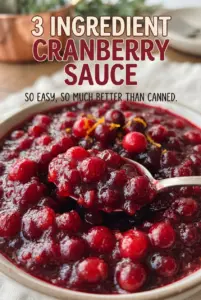
Thick, glossy cranberry sauce with a bright tart edge and just enough sweetness has a way of disappearing before it ever hits the table. The berries burst into a jammy, spoonable sauce that looks sharp next to roasted turkey, but it also earns its place beside pork, biscuits, yogurt, or a leftover sandwich the next day. This version keeps the ingredient list short and the method straightforward, which means the flavor stays clean and the texture stays lively instead of turning heavy or dull.
The trick is cooking the sugar and water first so the cranberries go into a fully dissolved syrup. That helps the berries soften evenly and keeps the sauce from tasting grainy. As it cools, the mixture thickens on its own, so it should look a little loose when you pull it from the stove. If you wait for it to seem finished in the pan, it usually ends up too stiff once chilled.
Below, I’ll walk through the small timing details that matter, what to do if you want a smoother sauce, and how to store it so it tastes just as good a day or two later.
The berries burst exactly when you said they would, and it thickened into that perfect spoonable texture after chilling. I used it on turkey sandwiches all week.
Save this jammy 3 ingredient cranberry sauce for the holidays or any meal that needs a bright, ruby-red side.
The Part Most Cranberry Sauces Get Wrong
Fresh cranberries need a hard simmer to burst, but they also need time to finish thickening after the heat comes off. If the sauce looks a little loose in the pan, that’s normal. Cranberries carry enough natural pectin to set up as they cool, and rushing that stage is how people end up with a paste instead of a sauce. The sugar-water base matters too, because it gives the berries a clean, even start instead of letting the sugar sit in pockets at the bottom of the pan.
The other mistake is cooking it until every berry has completely collapsed. A few whole or partially split berries are a good sign here. They give the sauce a jammy texture and keep it from tasting flat. If you want something smoother, you can stir it a little more aggressively near the end, but I like leaving some texture so each spoonful still feels bright and fresh.
What Each Ingredient Is Actually Doing In This Sauce
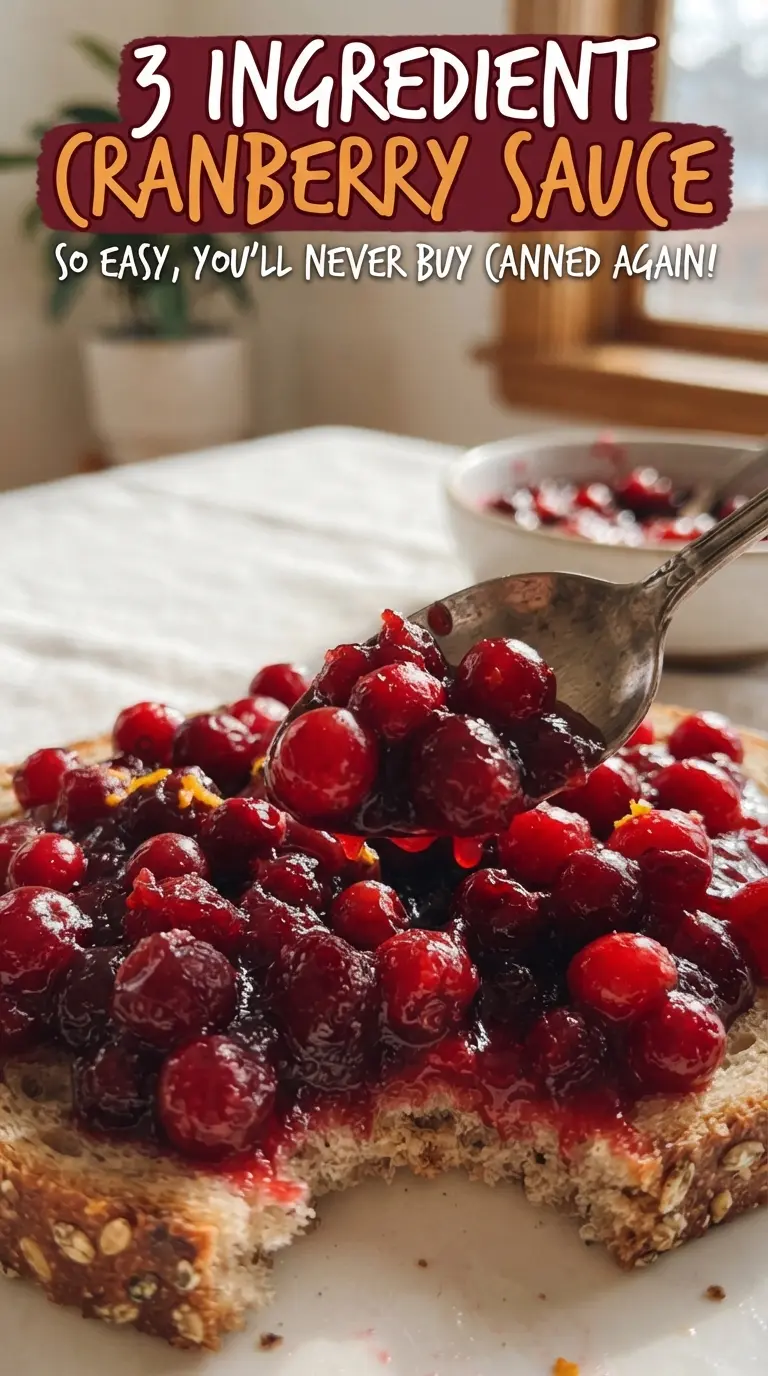
- Fresh cranberries — These are the whole point of the recipe. Fresh berries hold their shape long enough to burst in the simmer, which gives you a sauce with soft skins, jammy centers, and a little texture instead of a smooth puree. Frozen cranberries also work straight from the freezer; just expect a slightly longer simmer.
- Granulated sugar — Sugar balances the sharp cranberry bite and helps the sauce thicken as it cooks and cools. White sugar keeps the flavor clean, which is what lets the fruit taste like itself. Brown sugar will work in a pinch, but it adds molasses notes that make the sauce darker and less bright.
- Water — This is the cooking liquid that turns the sugar into syrup before the berries go in. You don’t need stock, juice, or anything fancier unless you want to change the flavor on purpose. The only real job here is giving the cranberries enough liquid to cook evenly without scorching.
Simmering It Until It Sets On Its Own
Starting with a Clean Syrup
Bring the sugar and water to a full boil first, stirring until the sugar disappears completely. The liquid should look clear, not gritty, before the cranberries go in. If you add the fruit too early, unmelted sugar can cling to the berries and leave the sauce uneven. A quick boil is enough here; you’re not trying to reduce the liquid yet.
Letting the Berries Burst
Add the cranberries and return the pan to a boil, then drop the heat to a steady simmer. You’ll hear the berries start to pop after a few minutes, and the mixture will look looser before it thickens. Stir occasionally so the bottom doesn’t catch, but don’t stir constantly or you’ll break down the berries too fast and lose that jammy texture. After about 10 minutes, most of the berries should be split and the liquid slightly syrupy.
Cooling Before You Judge the Texture
Take the pan off the heat as soon as the berries are burst and the sauce looks glossy. It will still be thinner than the finished version. Let it cool completely, then chill it until serving so it can thicken into that spoonable consistency. If it seems loose at first, that doesn’t mean it failed; it means it’s working exactly the way cranberry sauce should.
How To Adjust It Without Losing The Bright Cranberry Flavor
Make it smoother
Cook the sauce as written, then mash it lightly with the back of a spoon or blend part of it once it cools. This keeps the same tart-sweet flavor but gives you a silkier finish that spreads more easily on toast or sandwiches.
Use frozen cranberries
Add them straight from frozen and give the sauce a few extra minutes over the simmer. There’s no need to thaw first, and skipping that step keeps the berries from getting watery before they hit the pan.
Cut the sugar a little
You can reduce the sugar slightly if you like a sharper sauce, but don’t slash it too far. Sugar doesn’t just sweeten here; it also helps the sauce thicken and taste balanced once it chills.
Make it vegan and naturally gluten-free
It already is. That’s part of why this recipe works so well for a crowd with different needs — the texture comes from the fruit itself, not butter, starch, or flour.
Storage and Reheating
- Refrigerator: Store in a covered container for up to 1 week. It thickens as it chills, so expect a firmer spoonable texture the next day.
- Freezer: It freezes well for up to 2 months. Freeze in a sealed container with a little headspace, then thaw overnight in the refrigerator.
- Reheating: Cranberry sauce is usually best served cold or cool, but if you want it warm, heat it gently on low until just loosened. High heat can make it bubble down too far and turn sticky.
Answers to the Questions Worth Asking
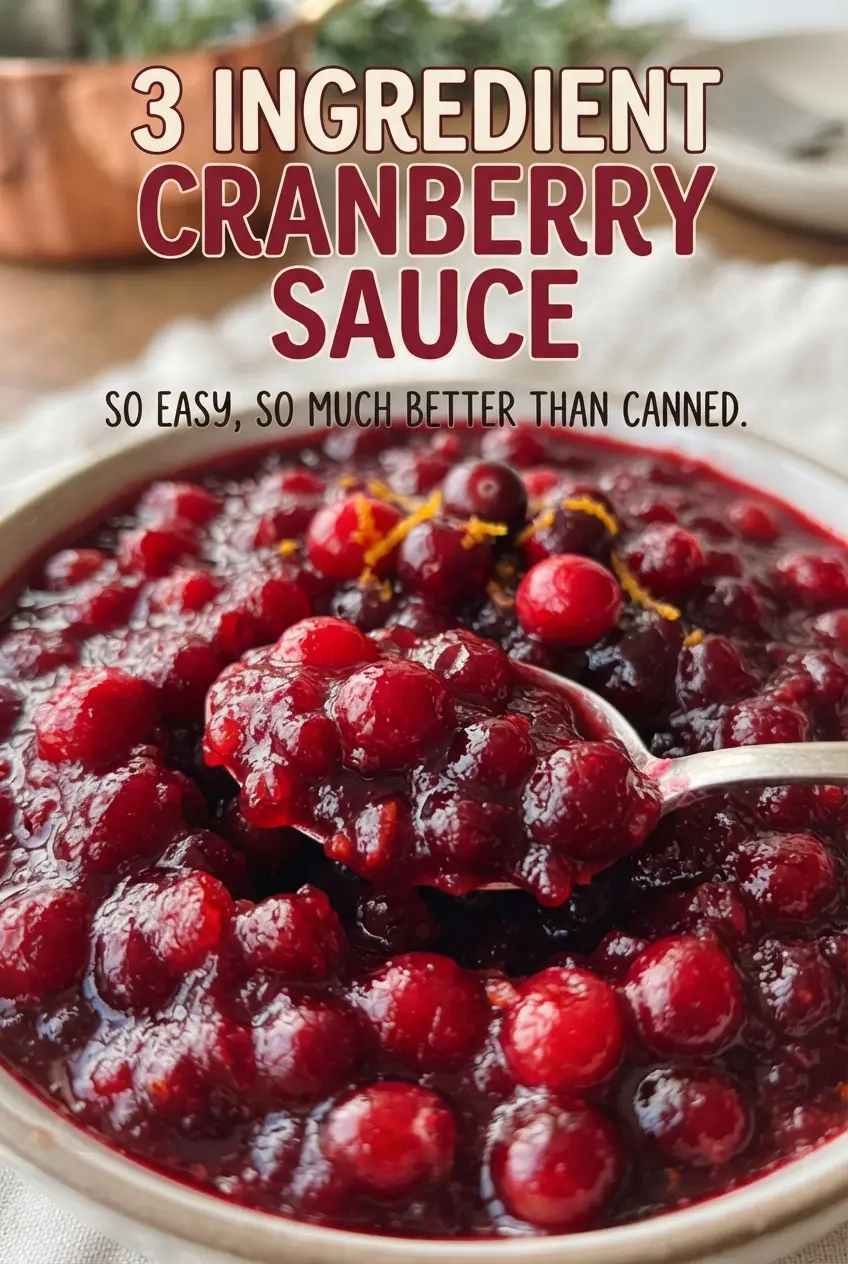
3 Ingredient Cranberry Sauce
Ingredients
Equipment
Method
- In a saucepan, combine granulated sugar and water and bring to a boil over high heat, stirring until the sugar dissolves. You should see steady bubbling across the surface within 2–3 minutes.
- Add fresh cranberries to the boiling syrup and return to a boil. Once the liquid is bubbling again, you’ll see berries begin to soften around the edges.
- Reduce heat to a gentle simmer and cook for 10 minutes, stirring occasionally, until berries burst and the sauce looks thicker and glossier. Aim for small bubbles that slowly burp while the mixture thickens.
- Remove from the heat and cool completely at room temperature until the sauce is no longer hot. It will look loose at first, then thicken as it cools.
- Transfer to the refrigerator and chill until serving so the sauce sets, about 2–10 hours. The sauce should hold its shape when spooned.