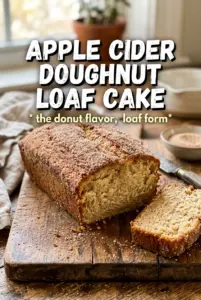
Apple cider doughnut loaf cake lands right in that sweet spot between a bakery-style quick bread and the kind of treat you keep sneaking slices from all afternoon. The crumb stays tender and plush, the edges bake up with that deep golden color you want, and the cinnamon sugar coating gives every slice the same nostalgic finish you get from a fresh cider doughnut.
The reduced apple cider is what gives this loaf its name and its flavor. Boiling it down concentrates the cider so it doesn’t disappear into the batter, and the sour cream keeps the crumb moist without turning heavy. Oil, instead of butter in the batter, gives you a softer texture that stays tender even after the loaf cools.
Below, I’ve included the little details that matter here: how to keep the crumb from turning dense, why the coating goes on while the loaf is still warm, and a few ways to adapt the recipe if you need a different finish.
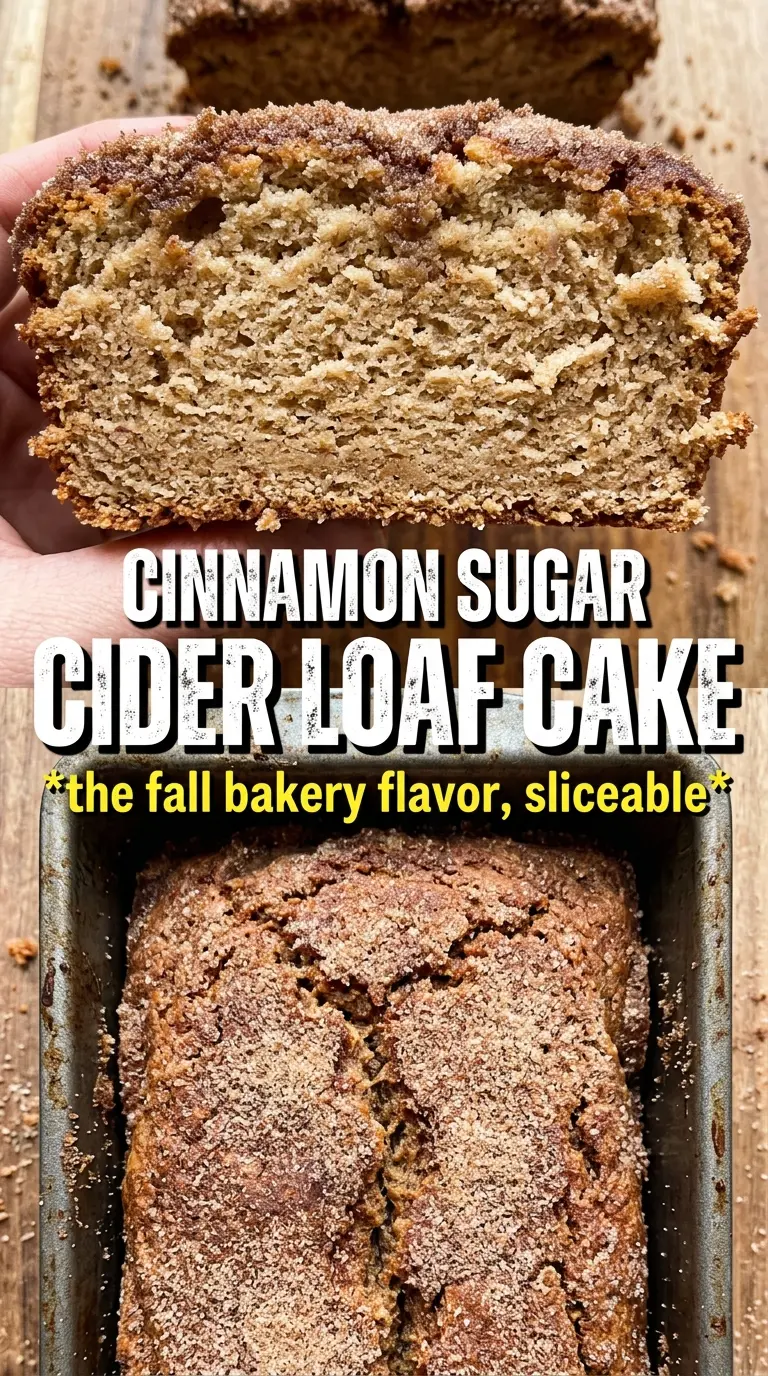
The cider flavor came through perfectly, and the cinnamon sugar stuck to the warm loaf without sliding off. Mine baked in 63 minutes and the crumb was soft, not gummy at all.
Save this apple cider doughnut loaf cake for the warm loaf, butter-brushed crust, and cinnamon sugar coating that tastes like a bakery doughnut in slice form.
The Trick to Keeping This Loaf Tasting Like a Doughnut, Not Sweet Bread
The biggest mistake with cider loaf cakes is treating the apple cider like a background flavor. It’s too delicate for that. When you reduce it first, the apple note turns sharper and more concentrated, so it actually survives the bake instead of vanishing under cinnamon and sugar.
The other thing that matters is the finish. Brushing the loaf with melted butter while it’s still warm gives the cinnamon sugar something to cling to, and that thin coating is what makes this taste like an apple cider doughnut instead of a plain spiced loaf. If you wait until it’s fully cool, the sugar won’t grab the crust the same way.
- Reduced apple cider — This is the flavor anchor. Start with twice as much cider as you need in the batter, then simmer it down until you have a concentrated 1/4 cup. Let it cool before mixing, or it can scramble the eggs and thin the batter unevenly.
- Sour cream — It keeps the crumb soft and plush. Plain Greek yogurt works in a pinch, but sour cream gives a slightly richer, more tender finish.
- Vegetable oil — Oil keeps the loaf moist for days. Butter would add flavor, but it also firms up more as the loaf cools, which takes you farther from that doughnut-shop texture.
- Spice blend — Cinnamon carries the flavor, but nutmeg, allspice, and cardamom make it taste layered instead of flat. If you only have cinnamon and nutmeg, the loaf still works; it just reads a little simpler.
What Each Ingredient Is Actually Doing in This Recipe
- Primary ingredient (the star) — Quality matters most. Choose the best you can find.
- Cooking medium (oil, butter, or broth) — This carries flavors and prevents dryness.
- Seasonings (salt, pepper, spices, herbs) — Layer flavors so nothing overpowers. Build depth gradually.
- Aromatics (garlic, onion, herbs) — Cook with fat to bloom flavors. Become the foundation.
- Supporting ingredients — Complement the main ingredient without overpowering it.
- Sauce or liquid (if applicable) — Brings flavors together. Balance richness with acid.
- Acid (lemon, vinegar, wine, or other) — Brightens and prevents flat-tasting results.
- Final finish (garnish, glaze, or sauce) — Prevents one-dimensional taste and adds visual appeal.
Building the Batter and the Coating Without Losing the Texture
Reduce the cider first
Put the cider in a small saucepan and simmer it over medium heat until it drops to 1/4 cup. You want a stronger apple aroma and a slightly syrupy look, not a hard boil that scorches the edges. Cool it before it goes into the batter so the eggs don’t start to set and the sour cream stays smooth.
Mix the wet ingredients until they look emulsified
Whisk the oil, both sugars, eggs, vanilla, reduced cider, and sour cream until the mixture looks smooth and a little glossy. A few sugar grains are fine, but you don’t want streaks of sour cream or visible egg. If the wet mixture is lumpy here, the loaf can bake up unevenly and the crumb will feel tight in spots.
Fold the dry ingredients just until the flour disappears
Stir the flour mixture into the wet ingredients with a light hand and stop as soon as you stop seeing dry pockets. Overmixing builds gluten and gives you a tough loaf with tunnels through the crumb. The batter should be thick but spreadable, not stretchy.
Brush warm, then coat generously
Once the loaf is out of the pan and still warm, brush every side with melted butter. Roll or sprinkle it in the cinnamon sugar while the surface is tacky. If the loaf cools too much, the coating turns patchy instead of forming that crisp, sweet crust that makes the whole recipe work.
How to Adapt This Apple Cider Doughnut Loaf Cake for Different Kitchens
Dairy-Free Version
Use a thick dairy-free yogurt in place of the sour cream and brush the loaf with melted dairy-free butter or a neutral oil before coating. The loaf will still be soft and spiced, but the crust won’t taste quite as rich as the original butter finish.
Gluten-Free Swap
Use a 1:1 gluten-free baking flour that includes xanthan gum. The batter should look about the same, but gluten-free loaves can brown a little faster, so start checking a few minutes early and rely on the toothpick test instead of the clock alone.
Muffin-Style Bake
Spoon the batter into a lined muffin tin and bake until the tops spring back and a tester comes out clean. You’ll get more crisp cinnamon-sugar edges per bite, but the bake time drops a lot, so start checking around 18 to 22 minutes.
Storage and Reheating
- Refrigerator: Store covered for up to 4 days. The cinnamon sugar coating will soften a bit, but the loaf stays moist.
- Freezer: Freeze slices tightly wrapped for up to 2 months. For the best texture, freeze without the final sugar coating and add it after reheating.
- Reheating: Warm slices in a 300F oven or toaster oven until just heated through. The common mistake is microwaving too long, which makes the crumb rubbery and melts the coating into a sticky layer.
Questions I Get Asked About This Recipe
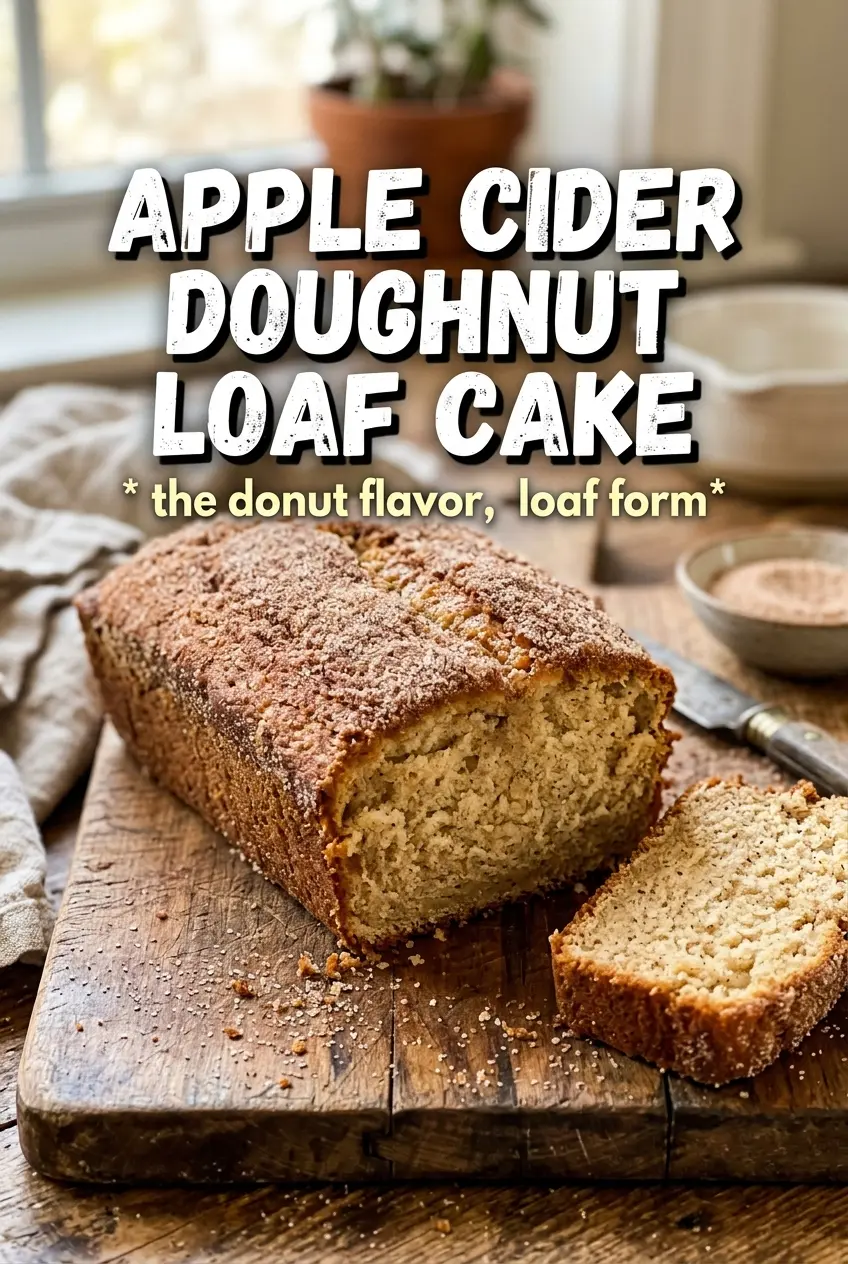
Apple Cider Doughnut Loaf Cake
Ingredients
Equipment
Method
- Reduce apple cider to 1/4 cup over medium heat, then cool. You want it concentrated so the loaf keeps a doughnut-style apple cider flavor.
- Preheat oven to 350F, then grease a 9x5 loaf pan. Make sure the pan is fully coated so the crust releases cleanly.
- Whisk flour, baking powder, baking soda, cinnamon, nutmeg, allspice, cardamom, and salt. Mix until the spices are evenly distributed with no visible streaks.
- Whisk vegetable oil, granulated sugar, brown sugar, eggs, vanilla extract, reduced cider, and sour cream until smooth. The batter should look glossy and cohesive before adding the dry mix.
- Fold in the flour mixture. Stop mixing as soon as no dry flour remains for a tender crumb.
- Bake for 60-65 minutes at 350F until a toothpick comes out clean. The top should be deep golden and set through the center.
- Remove from pan while warm and brush all sides with melted butter. This helps the cinnamon-sugar coating adhere evenly.
- Roll in or sprinkle generously with cinnamon sugar. Let it rest briefly so the coating sticks and forms a lightly crisp crust.