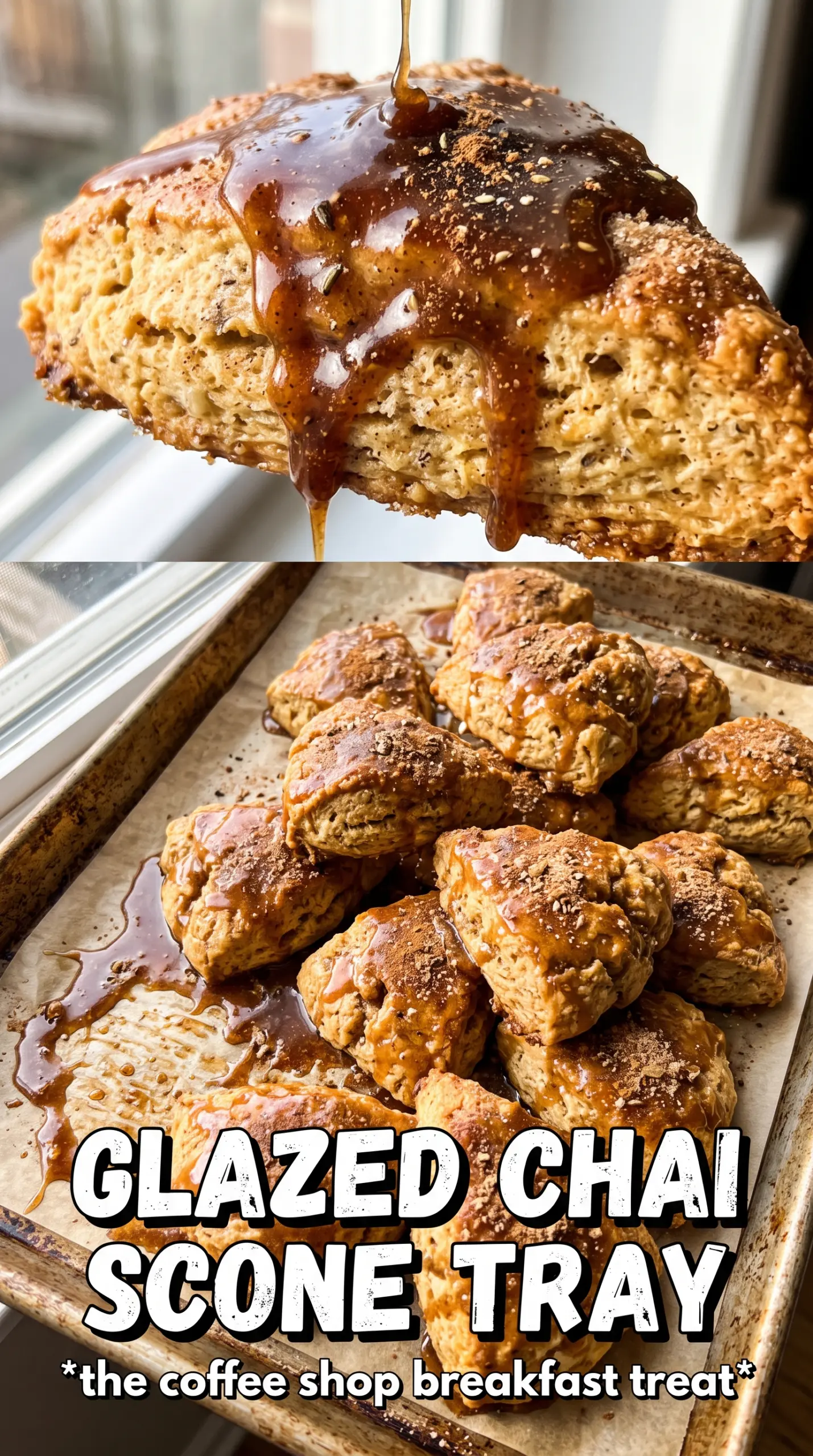
Golden chai scones with a maple chai glaze hit that sweet spot between tender and sturdy. The outside bakes up lightly crisp, the inside stays soft and buttery, and every bite carries cinnamon, cardamom, ginger, and cloves without tipping into anything dusty or heavy. The glaze finishes them with a clean maple sweetness that settles into the warm spices instead of covering them up.
What makes these work is the way the cold butter stays in little pieces until the oven melts it. Those pockets create lift and keep the crumb from turning cakey. The cream, eggs, and vanilla add enough richness to make the dough easy to bring together, but the key is stopping the mix the moment the flour disappears. If you work it like bread dough, the scones will bake up tough. If you treat the dough gently, they split at the edges and feel tender all the way through.
Below, I’ve included the one texture cue I watch for when cutting the butter, plus the best way to glaze these so the maple flavor stays bright instead of muddy.
The scones baked up with those flaky little butter pockets on the inside, and the maple glaze set just enough that it didn’t slide off. My kitchen smelled like a bakery for an hour.
Like these chai scones? Save them to Pinterest for a breakfast bake with flaky layers and a maple chai glaze that tastes bakery-made.
The Butter Needs to Stay in Pieces for the Crumb to Stay Tender
With scones, the most common mistake is overmixing after the butter goes in. Once the butter is cut into the dry ingredients, you want a mixture that looks sandy with a few pea-sized bits still visible. Those little pieces melt in the oven and leave tiny air pockets behind, which is what gives scones that layered, tender bite instead of a dry biscuit texture.
The dough also needs to stay cold. If the butter starts to soften before baking, the scones spread more and lose their lift. I mix just until the flour is moistened, then pat the dough into shape with my hands instead of kneading it. The less you handle it, the better the crumb.
- Cold butter — This is the engine of the recipe. Room-temperature butter blends too smoothly and you lose the flaky pockets that make the texture special.
- Baking powder — Scones rely on a strong lift, and this amount helps them rise quickly in the oven before the butter fully melts.
- Spices — The cinnamon, cardamom, ginger, and cloves are what make the dough taste like chai instead of just sweet spice bread. Fresh spices make a noticeable difference here.
- Heavy cream — It adds richness and keeps the crumb tender. Whole milk works in a pinch, but the scones will bake up a little less lush.
What Each Ingredient Is Actually Doing in the Dough and Glaze
The flour gives the scones their structure, but the ratio matters. Too much extra flour packed into the cup will dry them out fast, so spoon and level if you measure that way. The sugar in the dough is modest on purpose; it supports browning and keeps the spice blend from tasting sharp without making the scones cakey.
For the glaze, maple syrup does more than sweeten. It gives the powdered sugar enough body to drizzle while keeping the flavor warm and round. The strongly brewed chai tea matters because it thins the glaze without watering down the taste. If you skip the tea and use plain milk, the glaze will taste flatter. The spice in the glaze should stay lighter than the dough so it reads as a finish, not a second layer of batter.
Cut, Bake, and Glaze Before the Scones Dry Out
Mix the dry ingredients first
Whisk the flour, sugar, baking powder, cinnamon, cardamom, ginger, cloves, and salt until the color looks even. That keeps the spices from clumping in one bite and gives you a more balanced crumb. When you cut in the butter, stop when the pieces range from coarse crumbs to small pebbles. If the mixture turns paste-like, the butter has warmed too much and the final scones will be dense.
Bring the dough together with a light hand
Whisk the cream, eggs, and vanilla in a separate bowl, then stir them into the flour just until the dry patches disappear. The dough will look shaggy and a little rough, and that’s what you want. Turn it out, pat it into an 8-inch circle, and press only enough to make it hold. Too much handling develops gluten and tightens the crumb.
Cut clean wedges and bake hot
Use a sharp knife or bench scraper to cut the circle into 8 wedges and transfer them to the parchment-lined sheet. Brush the tops with a little cream for better color, then bake at 400°F until the edges are golden and the centers look set, about 18 to 20 minutes. If they’re still pale at the edges, give them another minute or two. Pull them before they dry out; scones keep cooking from the residual heat after they leave the oven.
Glaze after a short cool
Let the scones cool for about 10 minutes before drizzling the glaze. If you glaze them immediately, the topping slides off and disappears into the crust. Whisk the glaze until smooth and pour it in slow stripes over the tops so some of the spice-dusted surface stays visible. That contrast is part of what makes them feel finished rather than frosted.
How to Adapt These Scones Without Losing the Texture
Dairy-Free With Coconut Cream
Swap the heavy cream for full-fat coconut cream and use a plant-based butter that behaves like sticks of butter in baking. The scones will still rise, but the flavor shifts slightly toward coconut and the crumb will be a touch less rich. For the glaze, use brewed chai instead of milk so the texture stays thin enough to drizzle.
Gluten-Free With a 1:1 Baking Blend
A good cup-for-cup gluten-free flour blend can work here, but don’t expect the exact same flaky break. The dough may need a gentler touch and a few extra minutes of resting before baking so the starches hydrate. If the mix seems dry, add cream one tablespoon at a time until it just comes together.
Make-Ahead Freezer Wedges
Shape and cut the scones, then freeze the wedges on a tray until solid before moving them to a freezer bag. Bake straight from frozen, adding a few minutes to the bake time. This keeps the butter cold and gives you better lift than freezing baked scones.
Storage and Reheating
- Refrigerator: Store in an airtight container for up to 3 days. The glaze will soften a bit, but the flavor stays good.
- Freezer: Baked scones freeze well for up to 2 months. Wrap them individually so they don’t pick up freezer odors.
- Reheating: Warm in a 300°F oven for 8 to 10 minutes. The common mistake is microwaving them too long, which makes the crumb rubbery and the glaze sticky.
Answers to the Questions Worth Asking

Chai Scones With Maple Chai Glaze
Ingredients
Equipment
Method
- Preheat the oven to 400°F and line a sheet pan with parchment. You want the oven fully hot before baking for good lift and color.
- Whisk all-purpose flour, granulated sugar, baking powder, cinnamon, cardamom, ginger, cloves, and salt until evenly combined. Stop when the spices are streak-free.
- Cut in the cold cubed unsalted butter until the mixture looks crumbly. Aim for pea-size bits so the scones bake up tender and layered.
- Whisk heavy cream, eggs, and vanilla extract, then pour into the flour mixture. Stir until just combined—do not overmix.
- Pat the dough into an 8-inch circle and cut into 8 wedges. Keep the cuts clean so each piece bakes evenly.
- Brush the tops with heavy cream. Bake for 18–20 minutes at 400°F until the scones are golden.
- Cool the scones for 10 minutes. This sets the crumb just enough to hold the glaze.
- Whisk powdered sugar, maple syrup, strongly brewed chai tea, cinnamon, and cardamom until smooth. Drizzle generously over each scone in stripes for a glossy finish.