Beef carbonnade stew earns its place because the beef turns spoon-tender while the onions melt into a dark, sweet-savory broth that tastes like it simmered all day for a reason. The ale gives the sauce a deep malty edge, but it never takes over; what you end up with is a glossy, rich stew that clings to the meat and soaks beautifully into crusty bread.
The difference with this version is in the layering. The beef gets a hard sear first, the onions cook long enough to go fully golden, and the flour is stirred in before the beer goes in so the broth thickens naturally as it braises. That sequence matters. If you rush the onions or dump liquid in too soon, you lose the depth that makes carbonnade worth making in the first place.
Below, I’ll walk through the part that matters most: getting the onions properly caramelized and building a stew base that tastes rounded, not sharp. I’ve also included a few smart swaps and storage notes, because this is the kind of dish that tastes even better the next day.
The onions cooked down into this dark, jammy base and the sauce thickened perfectly after the long simmer. I served it with bread and my husband kept going back for more until the pot was basically empty.
Love the deep beer-braised flavor in this Beef Carbonnade Stew? Save it to Pinterest for the nights when you want a rich, one-pot braise with crusty bread.
The Part That Makes Carbonnade Taste Deep Instead of Thin
Carbonnade can go flat fast if the onions never get past soft. You want them cooked all the way down until they’re golden, sweet, and almost spreadable, because they’re doing a lot of the heavy lifting in the final broth. That long onion cook is what rounds out the beer and keeps the stew from tasting sharp.
The other thing that matters is the sear on the beef. Those browned bits on the bottom of the pot are not background noise; they become part of the sauce once the beer goes in. If the pot looks dry while you’re searing, that’s fine. Let the meat brown properly in batches instead of crowding it, or you’ll steam the beef and miss the depth completely.
What Each Ingredient Is Actually Doing in This Belgian Stew
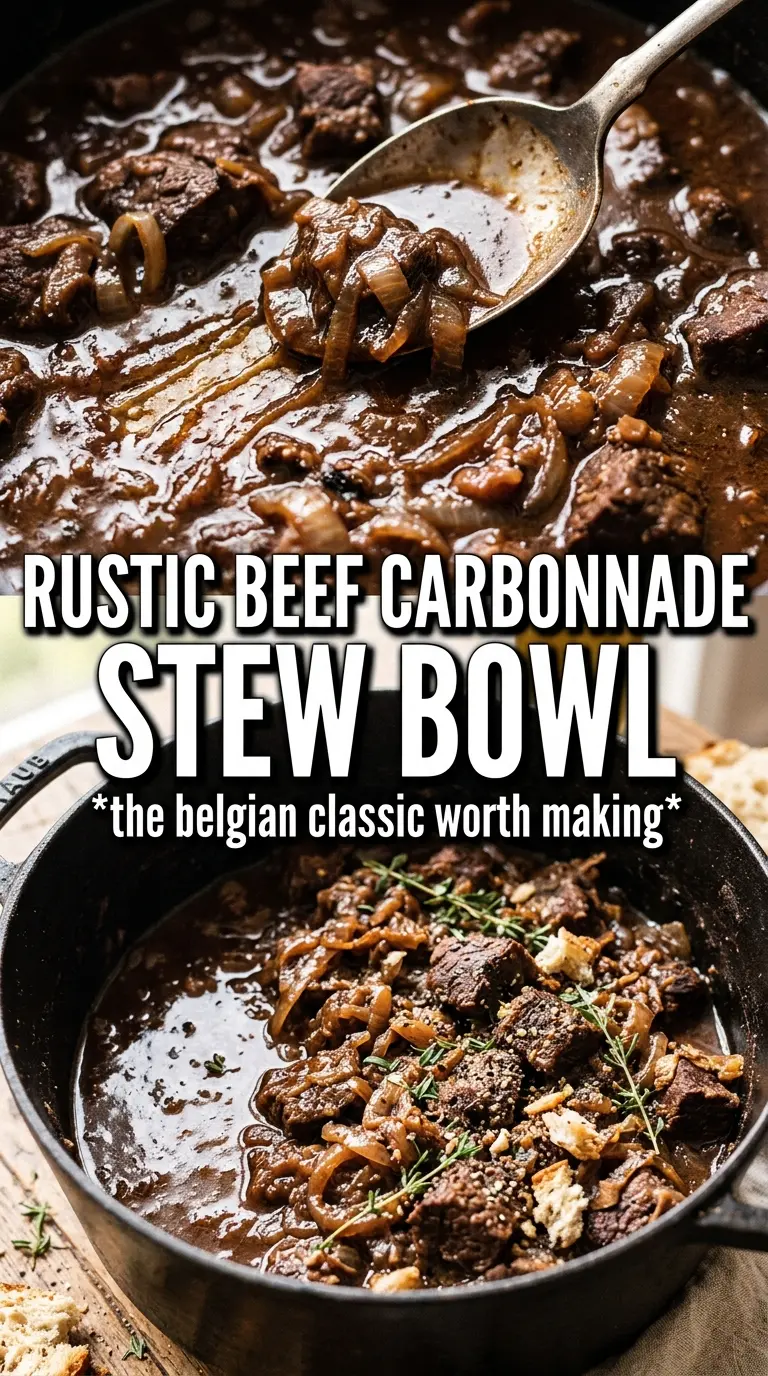
- Beef chuck — This is the cut that makes sense here. It has enough fat and connective tissue to turn tender during the long braise without drying out. Leaner beef will taste tighter and less silky.
- Dark Belgian ale or stout — This gives carbonnade its signature malty backbone. A stout brings a roastier edge, while a Belgian ale stays a little rounder and sweeter. Use something you’d actually drink; overly bitter beer can make the sauce harsh after the long simmer.
- Onions — They’re not just a background vegetable here. After 20 to 25 minutes, they become the sweet base that balances the vinegar and beer. Slice them thin so they break down evenly instead of staying stringy.
- Dijon mustard and red wine vinegar — These keep the stew from tasting heavy. The mustard adds body and a subtle sharpness, while the vinegar lifts the whole pot at the end. Don’t skip both; together they make the sauce taste finished.
- Flour — It helps the braising liquid thicken into a proper stew instead of a thin broth. Stir it in after the garlic cooks and before the beer goes in so it can coat the onions and cook out the raw taste.
Building the Braise So the Sauce Stays Glossy
Getting a real sear on the beef
Season the beef well, then sear it in hot oil in batches until it’s deeply browned on more than one side. You want a dark crust, not pale gray meat. If you crowd the pot, the temperature drops and the beef releases liquid before it browns, which is how you lose both flavor and texture.
Cooking the onions all the way down
After the beef comes out, lower the heat and cook the onions slowly until they turn soft, golden, and sweet. Stir often enough to keep them from scorching at the bottom, but don’t rush them by cranking the heat up. If the onions are still pale, the final stew will taste one-note.
Letting the beer and broth do the finishing work
Once the flour has cooked for a minute, pour in the beer and scrape the pot clean. That deglazing step matters because all the browned bits dissolve into the braising liquid and give the sauce its depth. Add the broth, tomato paste, vinegar, sugar, mustard, thyme, bay leaves, and beef, then bring it just to a boil before lowering it to a gentle simmer. A hard boil will tighten the meat instead of relaxing it into tenderness.
How to Adapt This Braise Without Losing What Makes It Work
Make It Gluten-Free
Swap the all-purpose flour for a gluten-free flour blend or thicken the stew at the end with a cornstarch slurry. The texture will still be rich, but the sauce may look a little less rustic and take a few extra minutes to come together.
Use Beef Stock Instead of Beer
If you want to skip alcohol, replace the beer with more beef broth plus 1 to 2 teaspoons of molasses or a splash of extra vinegar for balance. You’ll lose the malty depth that beer brings, but the stew will still taste full-bodied if you keep the onions well browned.
Make It Ahead for Better Flavor
Carbonnade gets better after a night in the fridge. The beef absorbs more of the sauce and the onions melt even further into it, so the stew tastes rounder the next day. Reheat it gently so the meat stays tender and the sauce doesn’t tighten too much.
Use a Different Cut of Beef
Beef chuck is the best fit, but brisket works well too if you want a slightly richer, meatier result. Avoid quick-cooking cuts like sirloin; they’ll get dry before the sauce has a chance to build depth.
Storage and Reheating
- Refrigerator: Store in an airtight container for up to 4 days. The sauce thickens as it chills, and the flavor gets deeper overnight.
- Freezer: It freezes well for up to 3 months. Cool completely before freezing in portions, and thaw it in the fridge so the beef stays tender instead of going stringy.
- Reheating: Warm it gently on the stovetop over low heat with a splash of broth if needed. Don’t boil it hard during reheating, or the beef can tighten and the sauce can get too thick too fast.
Questions I Get Asked About This Recipe
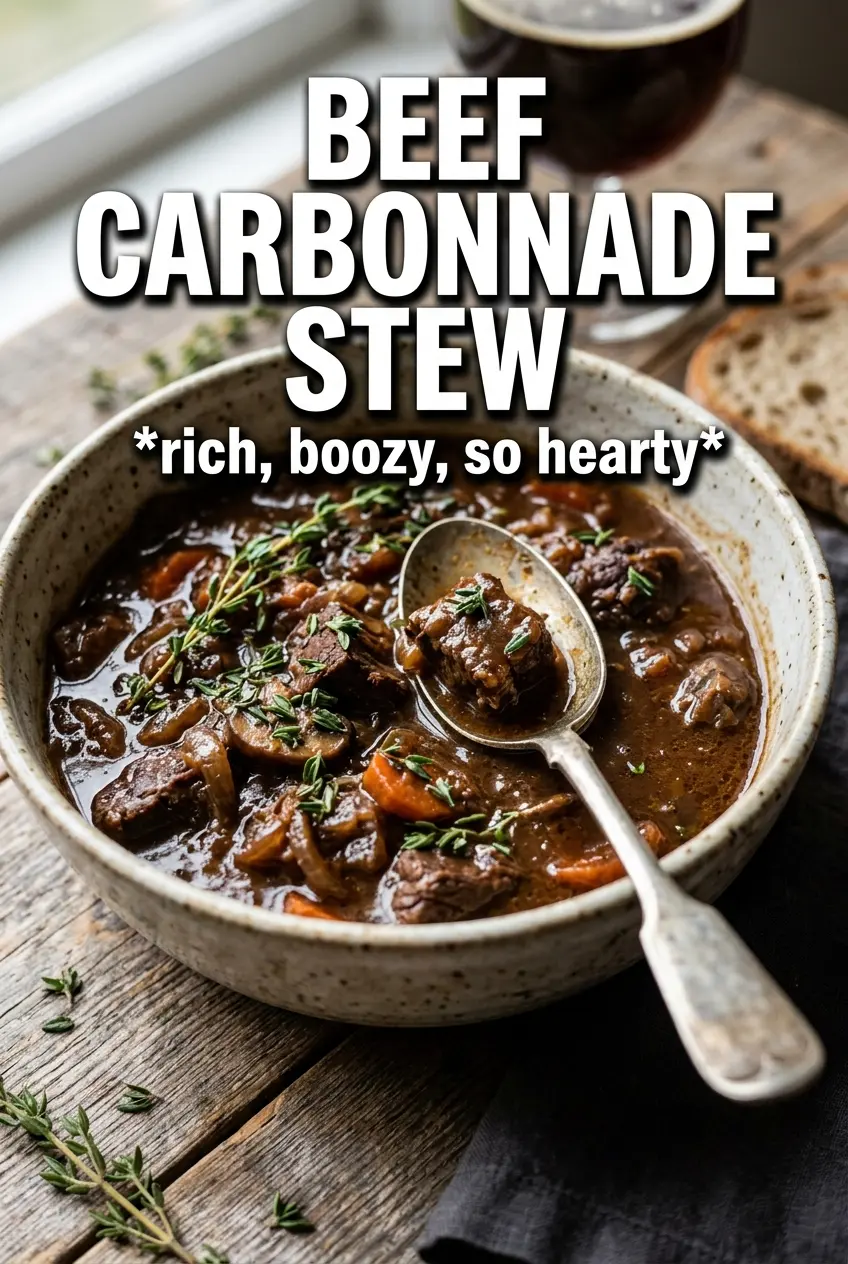
Beef Carbonnade Stew
Ingredients
Equipment
Method
- Season the beef chuck cubes with salt and pepper, then sear in vegetable oil in a Dutch oven over high heat until deeply browned, about 6-8 minutes. Remove the beef to a plate when browned.
- Cook the thinly sliced onions in the Dutch oven over medium heat until very soft and golden, 20-25 minutes. Stir occasionally so they caramelize without burning.
- Add the minced garlic and cook for 1 minute, stirring constantly. Whisk in the all-purpose flour and cook for 1 minute to remove the raw flour taste.
- Deglaze with the dark Belgian ale or stout beer, scraping up all browned bits from the bottom of the Dutch oven. Return the beef and any juices to the pot.
- Add the beef broth, tomato paste, red wine vinegar, brown sugar, Dijon mustard, fresh thyme, and bay leaves. Bring to a boil, then reduce heat to maintain a covered braise for 2 hours until the beef is very tender.
- Remove the bay leaves and thyme, then season the stew with salt and pepper to taste. Serve with crusty bread.