Tuscan chickpea soup lands in that sweet spot between hearty and light. The broth tastes layered and savory, the chickpeas give it substance, and the kale softens just enough to turn silky at the edges without going limp. A good bowl has that satisfying, rustic feel that makes you want a second slice of bread beside it.
What sets this version apart is the way the base gets built. Onion, garlic, rosemary, and a little red pepper bloom in olive oil first, so the broth doesn’t taste flat. Then part of the chickpeas gets mashed back in, which thickens the soup naturally instead of relying on cream or flour. The parmesan rind is optional, but if you have one, it adds a quiet background richness that makes the whole pot taste like it simmered longer than it did.
Below you’ll find the small details that matter most: how to keep the kale tender, when to mash the chickpeas, and which swaps still give you a bowl worth making on repeat.
The soup thickened up beautifully when I mashed a few of the chickpeas, and the rosemary with the parmesan rind made the broth taste like it had been simmering all afternoon.
Save this Tuscan Chickpea Soup for the nights when you want a garlicky, rosemary broth with chickpeas, kale, and a creamy finish from mashed beans.
The Trick to a Broth That Tastes Slow-Cooked
Most chickpea soups taste thin because everything goes into the pot at once and the broth never gets a chance to build. The fix is simple: soften the onion first, then let the garlic and red pepper flakes wake up in the oil before you add any liquid. That short step changes the whole pot from “boiled beans” to something with depth.
The other mistake is leaving the chickpeas whole from start to finish. Mashing a portion of them at the end gives the soup body without turning it into purée. You still get distinct chickpeas in every bite, but the broth clings to the spoon instead of sliding off it.
- Onion — Cook it until it turns translucent and loses its raw bite. If it browns hard, the broth can taste a little bitter instead of sweet and savory.
- Fresh rosemary — Use fresh here if you can. Dried rosemary works in a pinch, but fresh gives the soup a cleaner piney aroma that doesn’t dominate the pot.
- Parmesan rind — This is the quiet secret. It melts enough to season the broth but doesn’t disappear completely, so pull it out after simmering.
What Each Ingredient Is Doing in the Pot
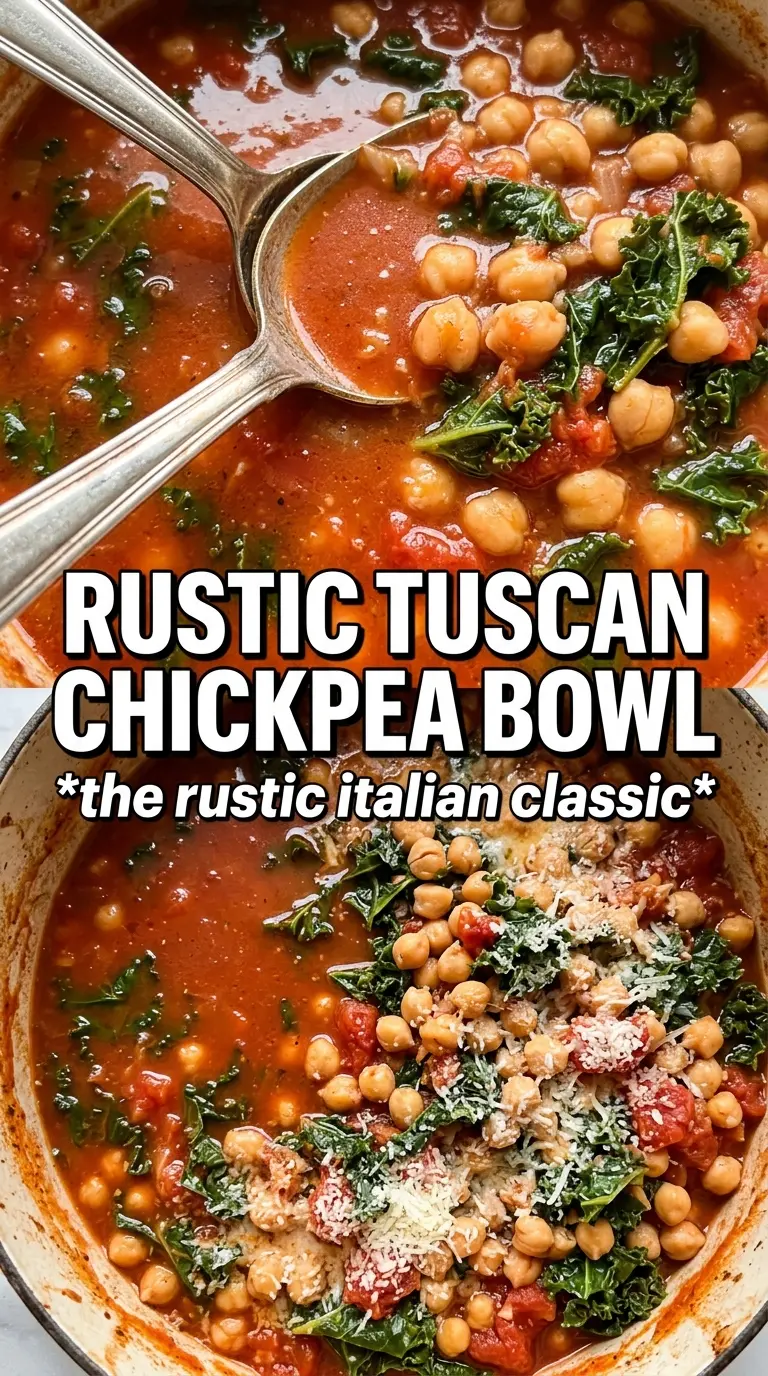
- Chickpeas — These are the backbone of the soup. Canned chickpeas work perfectly because they’re already tender; just drain them well so the broth doesn’t turn cloudy and loose.
- Fire-roasted diced tomatoes — They add a little smoky sweetness that regular diced tomatoes don’t quite match. If you only have plain diced tomatoes, add a pinch more red pepper flakes and a small splash of lemon at the end to wake the pot up.
- Kale — Kale holds its shape and stays pleasantly chewy after a short simmer. Chop it into bite-size pieces and strip out the thick stems so you don’t end up with tough strips in the bowl.
- Vegetable broth — A broth with decent flavor matters here because the ingredient list is simple. A bland broth makes the soup taste hollow, while a good one lets the rosemary and parmesan rind do their job.
- Lemon and olive oil for serving — Don’t skip the finish. The lemon sharpens the broth, and the olive oil gives the surface that glossy restaurant-style look and a rounder mouthfeel.
Building the Soup So the Texture Stays Right
Softening the Onion First
Warm the olive oil in a large pot and cook the onion until it’s soft and translucent, about five minutes. You want it sweet and fragrant, not browned. If the onion stays firm, the base tastes sharp and underdeveloped, and that shows up in the finished broth.
Waking Up the Garlic and Spice
Add the garlic and red pepper flakes and cook for about two minutes, just until the garlic smells nutty and warm. Keep the heat moderate so the garlic doesn’t scorch. Burned garlic turns bitter fast, and once that happens, there’s no fixing it later.
Simmering the Broth and Beans
Stir in the chickpeas, tomatoes, broth, rosemary, Italian seasoning, and parmesan rind, then bring the pot to a boil before dropping it to a steady simmer. Twenty minutes is enough for the flavors to mingle and for the broth to pick up body from the chickpeas. Pull out the rosemary sprigs and rind before the next step so the soup stays clean and balanced.
Thickening Without Losing the Soup
Mash or blend about a third of the chickpeas right in the pot. That gives the broth a velvety base while leaving plenty of whole beans for texture. If you overblend, the soup can turn pasty, so stop as soon as it looks slightly creamy and still brothy.
Finishing with the Greens
Stir in the kale and cook just until it wilts, about five minutes. It should turn dark green and tender, but still hold enough shape to look fresh in the bowl. Season with salt, pepper, and a squeeze of lemon, then finish with a drizzle of olive oil and parmesan.
How to Tweak This Bowl Without Losing What Makes It Good
Make It Dairy-Free
Skip the parmesan rind and the parmesan finish, then add a little extra salt and a touch more lemon at the end. You’ll lose the subtle savory depth that cheese brings, but the soup still has enough rosemary, garlic, and tomato to taste complete.
Make It Thicker and More Filling
Blend nearly half the chickpeas instead of just a third, or let the soup simmer uncovered for a few extra minutes. That gives you a denser, stew-like bowl that’s great with crusty bread, though it will feel less brothy.
Use Lacinato Kale or Spinach
Lacinato kale is a little more tender than curly kale and gives a softer bite. Spinach works too, but it needs only a minute or two at the end, or it will disappear into the broth and lose its bright color.
Storage and Reheating
- Refrigerator: Store for up to 4 days. The chickpeas keep soaking up broth, so expect the soup to thicken a bit overnight.
- Freezer: This freezes well for up to 3 months. Cool it completely first, then freeze without the parmesan topping and add fresh garnish after reheating.
- Reheating: Warm it gently on the stove over medium-low heat with a splash of broth or water. Don’t boil it hard, or the kale can turn dull and the chickpeas can break down too much.
Questions I Get Asked About This Recipe
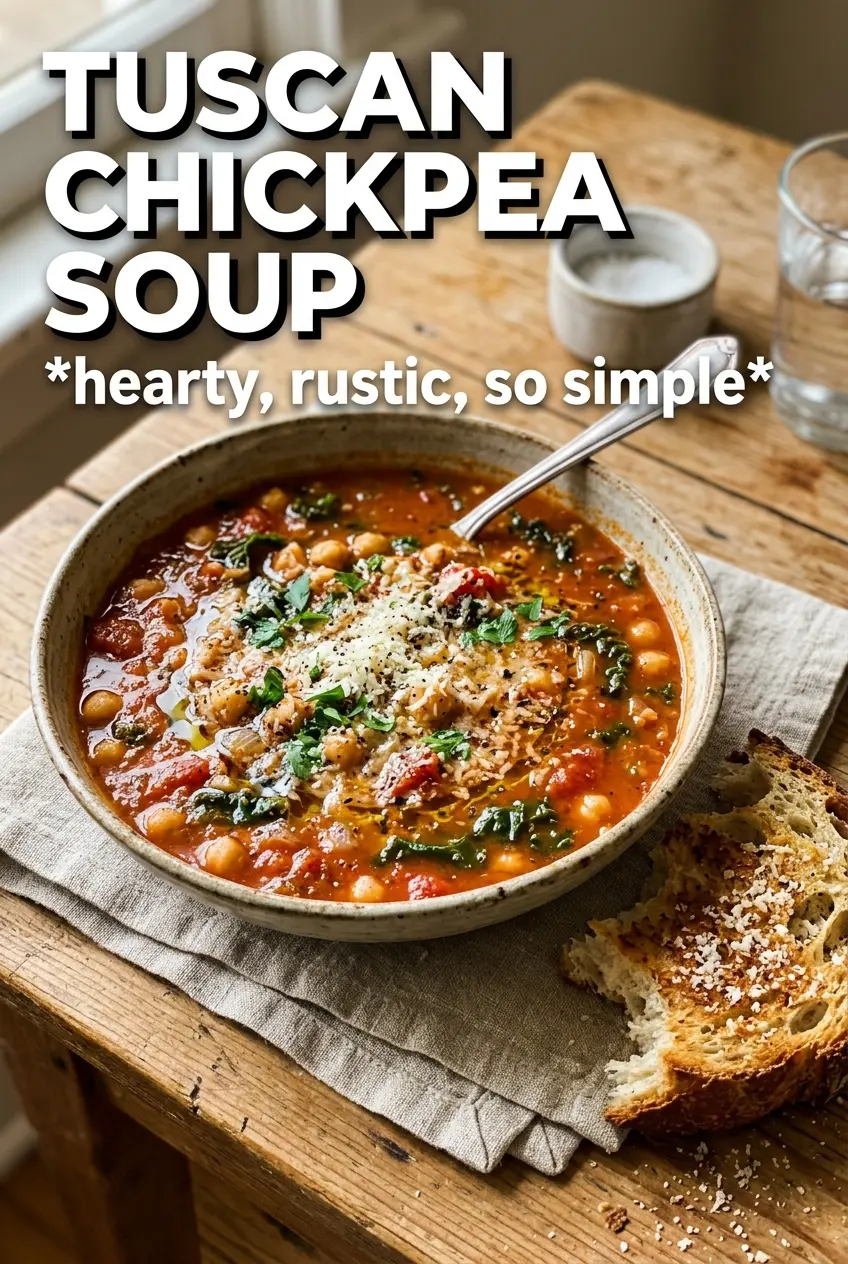
Tuscan Chickpea Soup
Ingredients
Equipment
Method
- Heat 2 tbsp olive oil in a large pot over medium heat. Sauté the diced onion for 5 minutes, stirring occasionally, until softened.
- Add the minced garlic and red pepper flakes to the pot. Cook for 2 minutes, stirring constantly, until fragrant.
- Add the drained chickpeas, fire-roasted diced tomatoes, vegetable broth, fresh rosemary, Italian seasoning, and parmesan rind (if using). Bring to a boil, then keep the bubbles lively.
- Reduce to a simmer and cook for 20 minutes. Remove the rosemary sprigs and the parmesan rind after simmering.
- Mash or blend about a third of the chickpeas in the pot for a thicker consistency. Stir to distribute the creamy bits.
- Add the chopped kale to the pot. Cook for 5 minutes, stirring as it wilts.
- Season with salt and pepper to taste and add lemon juice to brighten the soup. Drizzle with olive oil and top with parmesan before serving.