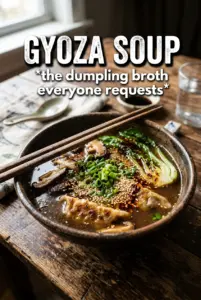
Gyoza soup hits that sweet spot between fast weeknight cooking and a bowl that feels like someone actually cared. The dumplings stay tender, the broth picks up ginger and garlic without turning heavy, and the bok choy gives each spoonful a fresh, clean finish. It eats like a full meal, but it comes together with the kind of ease that makes it easy to put on repeat.
What makes this version work is the way the broth is built first. Simmering the garlic, ginger, soy sauce, mirin, and rice vinegar before the dumplings go in gives the soup a deeper, more balanced base than just dropping everything into plain broth. The gyoza cook right in the seasoned liquid, which lets them absorb flavor without falling apart, and the sesame oil goes in at the end so its aroma stays bright instead of disappearing in the simmer.
You’ll also find a few practical notes below on keeping the dumplings intact, what to swap if you don’t have bok choy or shiitakes, and how to keep the broth from tasting flat. Those small details are the difference between a decent dumpling soup and one you’ll want again next week.
The broth was clear, savory, and ginger-forward, and the dumplings stayed intact even after simmering. I added the chili oil at the table and it made the whole bowl taste restaurant-worthy.
Save this gyoza soup for the nights when you want a quick broth, tender dumplings, and a bowl that eats like a full meal.
The Trick to Keeping Gyoza Tender Instead of Split
The mistake most people make is boiling dumplings too hard. A rolling boil knocks them around, tears the wrappers, and clouds the broth with starch before the vegetables even go in. Keep the liquid at a steady simmer so the gyoza have enough movement to cook through without getting battered in the pot.
Frozen dumplings go straight into the broth from the freezer. Don’t thaw them first; soft wrappers are more likely to tear when they hit the pot. If the package says they need a little longer than 5 to 7 minutes, use that time as your guide and check one dumpling at the end for a hot center and a wrapper that feels supple, not gummy.
- Steady simmer, not hard boil — this keeps the dumplings intact and the broth clear.
- Add dumplings after the mushrooms — the broth gets a little body from the mushrooms before the wrappers go in.
- Use package timing as the final word — brands vary, and undercooked dumpling centers are the one thing that ruins the bowl.
What Each Ingredient Is Actually Doing in the Bowl
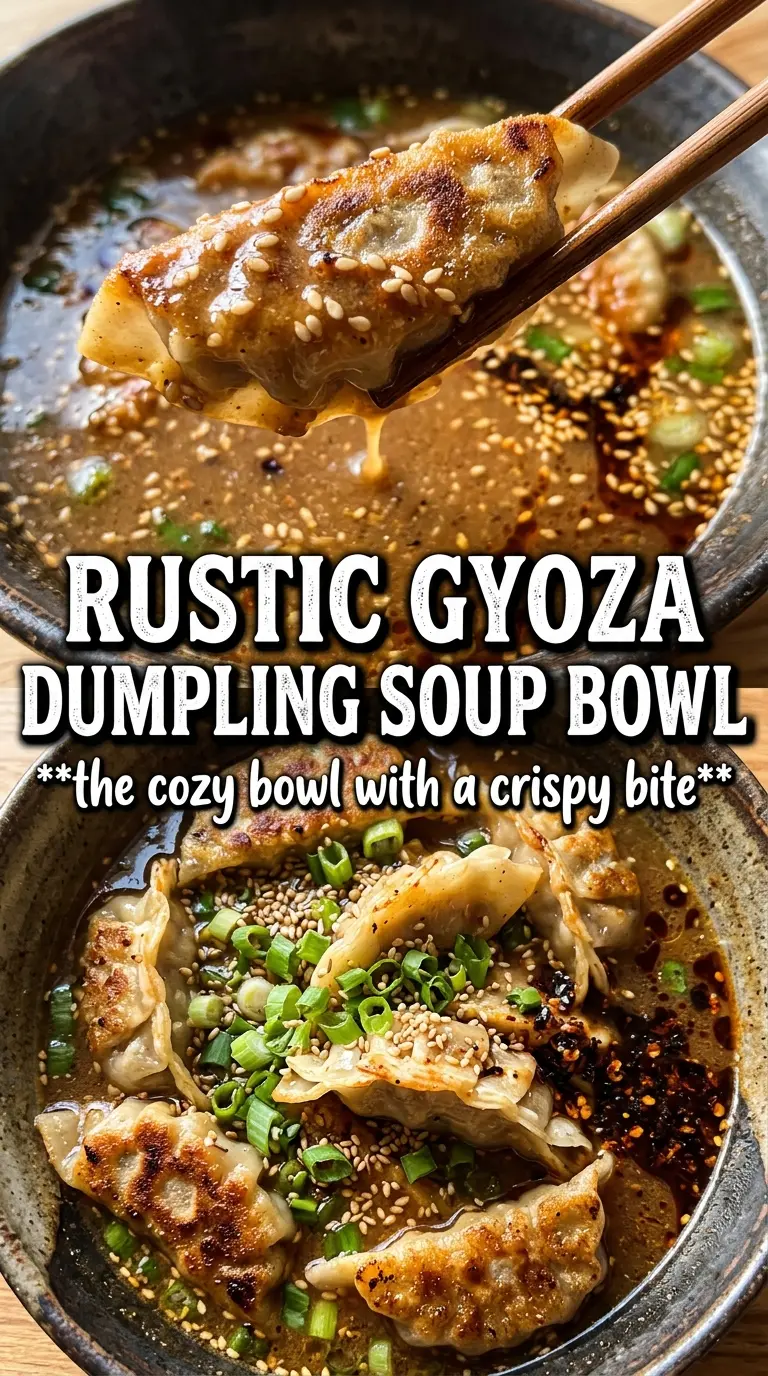
- Frozen or fresh gyoza — the dumplings are the meal here. Frozen works well, and it’s the easiest route because they hold their shape better than homemade if you’re moving quickly. If you use fresh, shorten the cook time and watch closely so the wrappers don’t go soft.
- Chicken broth — this is the backbone, so use one that tastes clean and savory on its own. A bland broth stays bland no matter how much soy sauce you add. If you need a lighter version, low-sodium broth gives you more control over the final salt level.
- Ginger and garlic — these are what make the broth taste alive. Fresh ginger is worth the extra minute of grating because dried ginger tastes flat here. Garlic can be minced fine or pressed, but don’t let it brown before the liquid goes in.
- Mirin and rice vinegar — mirin softens the edges and gives the broth a little roundness, while rice vinegar keeps it from tasting one-note. If you don’t have mirin, a small pinch of sugar with an extra splash of broth is a decent stand-in, but the flavor will be less polished.
- Bok choy and shiitake mushrooms — bok choy gives the soup freshness and crunch at the stem, while shiitakes bring that deep, savory note that makes the broth taste like it simmered longer than it did. Baby bok choy can be swapped in without any trouble; slice larger heads so the stems cook at the same pace as the greens.
- Sesame oil, chili oil, and sesame seeds — sesame oil finishes the broth with aroma, not heat, so add it at the end. Chili oil is for the table, where it can stay bright and punchy instead of mellowing in the pot. Sesame seeds add a little texture, but the real job here is the nutty finish from the oil.
Building the Broth So the Dumplings Taste Seasoned, Not Just Cooked
Starting with the aromatics
Bring the broth to a simmer first, then add the garlic, ginger, soy sauce, mirin, and rice vinegar. That gives the liquid time to pick up flavor before the dumplings go in, which matters because the gyoza only have a few minutes to absorb anything. Keep the heat gentle; if the garlic starts sputtering hard, the broth is too hot.
Letting the mushrooms do their work
Add the shiitakes and give them 3 to 4 minutes. They’ll soften and darken slightly, and the broth will pick up a deeper savory edge. If you throw the dumplings in before the mushrooms, the dumplings finish first and the mushrooms never have enough time to contribute much.
Cooking the gyoza without breaking the wrappers
Slide the dumplings into the simmering broth and cook them according to the package, usually 5 to 7 minutes. Stir once or twice with a gentle hand so they don’t stick to the bottom, but don’t keep them moving constantly. If they’re fresh, they’ll cook a touch faster; if they’re frozen and extra thick, test one before you call it done.
Finishing with greens and aroma
Add the bok choy near the end and cook just until the stems turn crisp-tender and the leaves wilt. Stir in the sesame oil off the heat or with the burner at its lowest setting, then taste for salt. Finish with green onions, sesame seeds, and chili oil right before serving so the top of the bowl tastes as fresh as the broth underneath.
How to Adapt This Bowl When You Need a Swap
Gluten-Free Version
Use gluten-free dumplings and swap the soy sauce for tamari or a certified gluten-free soy sauce. The broth still tastes balanced, but the dumpling wrapper texture may be a little softer depending on the brand, so watch the package timing closely.
Vegetarian Swap
Use vegetable broth and vegetable gyoza, then lean on the shiitakes for depth. If the broth tastes a little thin, add a splash more soy sauce and a tiny extra drizzle of sesame oil at the end.
No Bok Choy, No Problem
Napa cabbage, spinach, or baby kale all work. Spinach needs only the last minute, while cabbage should go in a little earlier so the thicker ribs soften. The bowl still stays light and brothy, just with a slightly different texture.
Make It Ahead for Faster Dinners
Mix the broth base and slice the vegetables ahead of time, then cook the dumplings fresh when you’re ready to eat. If you store cooked dumplings in the broth overnight, they’ll soften and the wrappers can start to split.
Storage and Reheating
- Refrigerator: Store leftovers for up to 2 days. The dumplings will soften as they sit, and the bok choy will lose some of its bite.
- Freezer: This soup doesn’t freeze well once assembled because the dumplings and greens turn mushy. Freeze the seasoned broth base on its own if you want to get ahead.
- Reheating: Warm it gently on the stove over low heat just until hot. A hard boil can split the dumplings and overcook the greens, which is the fastest way to ruin the texture.
Questions I Get Asked About This Recipe
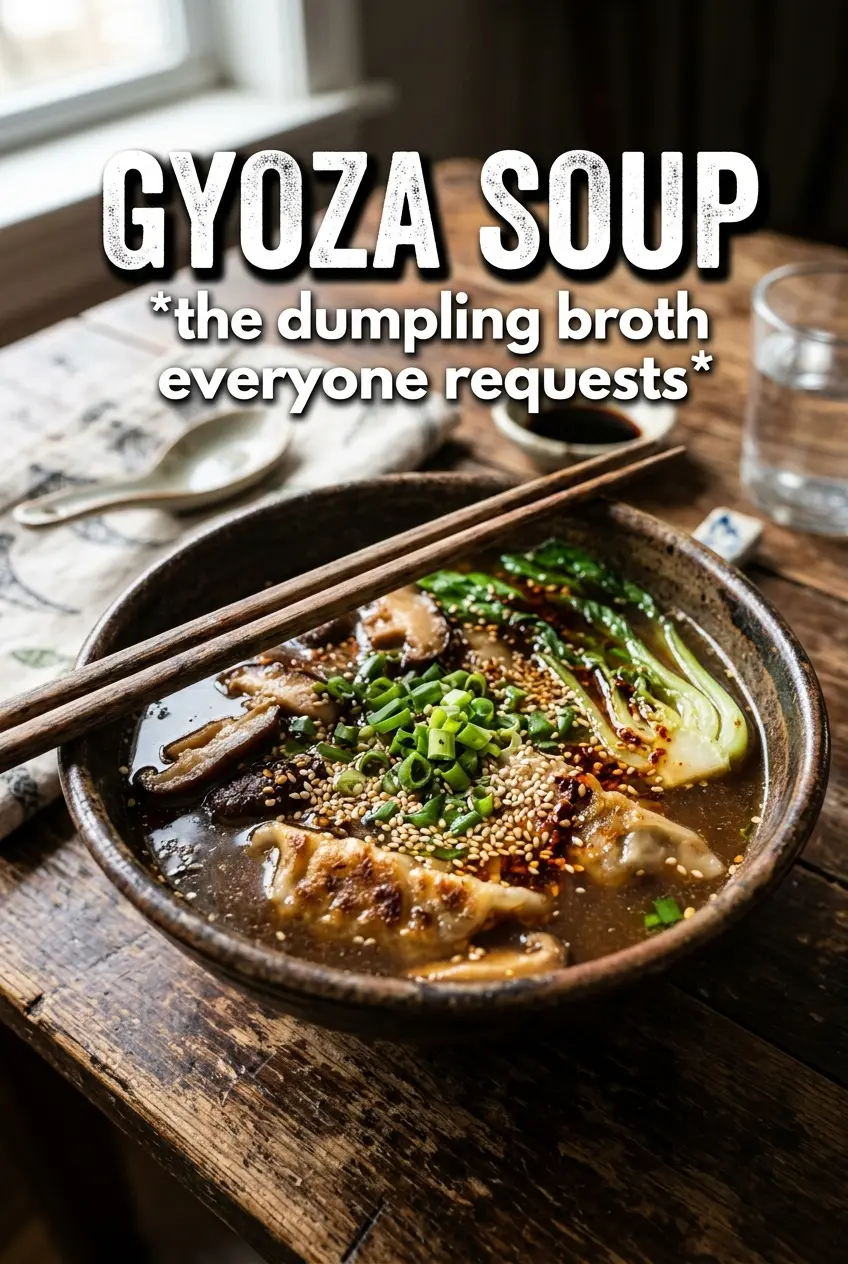
Gyoza Soup
Ingredients
Equipment
Method
- Bring the chicken broth to a simmer in a large Dutch oven, then stir in the garlic, grated ginger, soy sauce, mirin, and rice vinegar. Keep it at a steady simmer (about 200°F/93°C) for 5 minutes, stirring once or twice so aromatics distribute.
- Add the sliced shiitake mushrooms to the simmering broth. Simmer for 3 to 4 minutes until the mushrooms soften and the broth stays gently bubbling.
- Add the gyoza directly to the simmering broth without overcrowding. Cook according to package directions (typically 5 to 7 minutes) until the dumplings are cooked through and tender.
- Add the chopped bok choy and simmer for 2 to 3 minutes until wilted but still bright green. Stir gently once so all pieces get contact with the broth.
- Stir in the sesame oil, then taste and season with salt. Adjust seasoning to your preference and keep the soup at a light simmer while serving.
- Ladle the gyoza soup into bowls and top with sliced green onions, sesame seeds, and chili oil. Serve immediately while the broth is hot and the dumplings are still juicy.