Creamy garlic chicken gnocchi soup lands in that sweet spot between cozy and substantial. The broth is velvety, the gnocchi turn pillowy without falling apart, and the chicken gives it enough body that a bowl actually feels like dinner. The best versions taste rich without turning heavy, and this one keeps that balance by building flavor in layers instead of dumping everything into the pot at once.
What makes it work is the order. Onion goes in first so it softens and sweetens the base, then the garlic blooms just long enough to lose its sharp edge. The cream gets added after the broth has come up to a simmer, which keeps it smooth, and the parmesan goes in at the end so it melts into the soup instead of turning grainy. A small amount of nutmeg doesn’t make it taste sweet; it just rounds out the dairy and makes the garlic taste deeper.
Below, I’ve laid out the one step that keeps the broth silky, the ingredient swaps that actually hold up, and how to store the leftovers without turning the gnocchi mushy.
The broth stayed silky and the gnocchi were perfectly tender, not gummy. I added a little extra parmesan at the end and my husband went back for a second bowl before I even sat down.
Save this creamy garlic chicken gnocchi soup for the nights when you want a rich, one-pot dinner with pillowy gnocchi and a silky parmesan broth.
The Step That Keeps the Cream Broth Smooth Instead of Grainy
The mistake that ruins a soup like this is heat. If the cream goes into a hard boil, or the parmesan gets dumped in while the pot is roaring, the texture can split and turn slightly curdled or gritty. This soup stays smooth because the broth simmers gently before the cream goes in, and the cheese melts off the heat at the end when the liquid is calm.
The gnocchi also need attention at the right moment. They only need a few minutes in the hot broth, just until they float and feel tender when pressed against the side of the pot. Overcooking them makes them bloated and fragile, and once they sit in the soup too long they start losing that soft, dumpling-like texture that makes the dish work.
- Chicken breast — Rotisserie chicken works beautifully here and saves time. Freshly cooked chicken gives you more control over seasoning, but shredded leftover chicken is fine as long as it isn’t dry.
- Potato gnocchi — Shelf-stable, refrigerated, or frozen gnocchi all work. Refrigerated gnocchi usually cook the fastest and hold their shape best; if yours are frozen, add a minute or two and cook straight from frozen.
- Heavy cream — This is what gives the broth its body and keeps it from tasting thin. Half-and-half can work in a pinch, but the soup will be lighter and a little less silky.
- Parmesan — Use freshly grated parmesan if you can. Pre-shredded cheese often has anti-caking agents that make it melt less smoothly, which is exactly what you don’t want in a cream soup.
- Nutmeg — The amount is tiny, but it matters. It deepens the dairy flavor without making the soup taste like dessert, and it’s worth keeping in the recipe even though it looks optional at first glance.
What Each Ingredient Is Actually Doing in This Recipe

- Primary ingredient (the star) — Quality matters most. Choose the best you can find.
- Cooking medium (oil, butter, or broth) — This carries flavors and prevents dryness.
- Seasonings (salt, pepper, spices, herbs) — Layer flavors so nothing overpowers. Build depth gradually.
- Aromatics (garlic, onion, herbs) — Cook with fat to bloom flavors. Become the foundation.
- Supporting ingredients — Complement the main ingredient without overpowering it.
- Sauce or liquid (if applicable) — Brings flavors together. Balance richness with acid.
- Acid (lemon, vinegar, wine, or other) — Brightens and prevents flat-tasting results.
- Final finish (garnish, glaze, or sauce) — Prevents one-dimensional taste and adds visual appeal.
Building the Soup in the Right Order
Softening the Onion Base
Melt the butter in a large pot, then cook the diced onion until it turns translucent and soft at the edges. You’re not looking for color here; browned onion changes the flavor of the broth and can make the soup taste more like a stew. If the pot starts to dry out before the onion is ready, lower the heat instead of adding more butter too soon.
Waking Up the Garlic
Add the garlic and Italian seasoning and cook just until fragrant, about 2 minutes. The garlic should smell sweet and savory, not sharp or toasted. If it starts to brown, the heat is too high, and browned garlic will give the broth a bitter edge that hangs around in every spoonful.
Bringing the Broth and Cream Together
Pour in the chicken broth and bring it to a gentle simmer before stirring in the cream. The goal is a steady bubble around the edges, not a rolling boil. Once the cream is in, keep the heat moderate so the soup stays smooth and doesn’t scorch on the bottom of the pot.
Cooking the Gnocchi and Finishing the Bowl
Add the gnocchi and cook until they float and feel tender, usually 3 to 4 minutes. Stir gently so they don’t stick, but don’t keep agitating them once they’re soft or they can break apart. Add the shredded chicken and spinach next, then stir in the parmesan and nutmeg at the end so the cheese melts cleanly into the broth.
How to Adapt This Soup Without Losing the Creamy Texture
Make It Gluten-Free
Use gluten-free gnocchi if you can find it, or swap in gluten-free potato dumplings from the refrigerated section. The broth itself is already naturally gluten-free, so this swap mostly affects texture. Check the package directions closely, because gluten-free gnocchi can go soft faster than regular potato gnocchi.
Use Half-and-Half Instead of Heavy Cream
This lightens the soup, but it also makes it a little less rich and a bit more sensitive to high heat. Keep the simmer gentle and don’t let it boil after the dairy goes in. If you want a closer match to the original texture, stir in an extra spoonful of parmesan to help the broth feel fuller.
Make It a Rotisserie Chicken Shortcut
This is the easiest way to get dinner on the table fast. Shred the chicken and add it near the end so it only warms through; if it simmers too long, it can get stringy and dry. This is the best option when you want the soup to taste like it took more effort than it did.
Storage and Reheating
- Refrigerator: Store in an airtight container for up to 3 days. The gnocchi will absorb some broth, so the soup thickens as it sits.
- Freezer: It’s not the best freezer soup. Cream-based broths can separate after thawing, and the gnocchi can turn soft and grainy.
- Reheating: Warm it gently on the stove over low heat, adding a splash of broth or milk if needed. Don’t boil it again, or the cream can break and the gnocchi can turn mushy.
Questions I Get Asked About This Soup
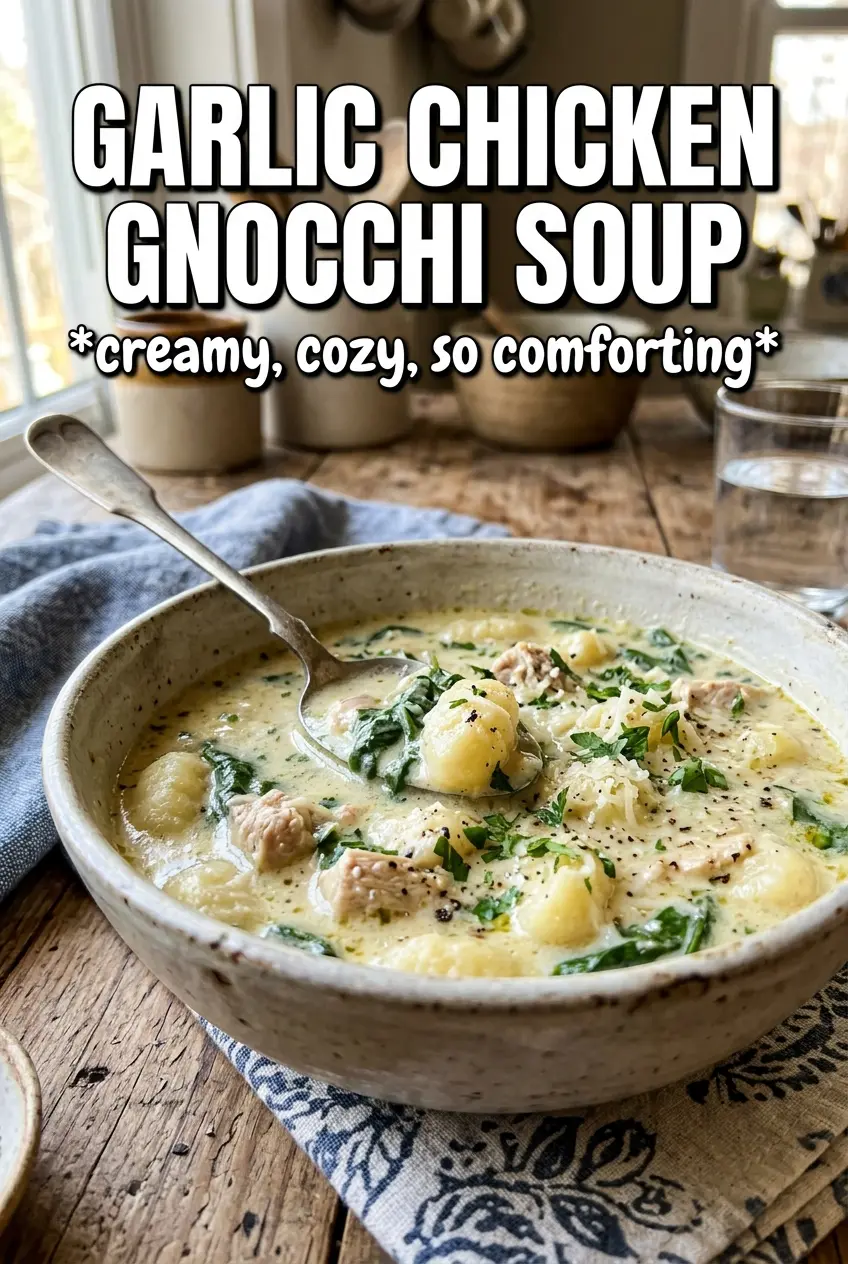
Creamy Garlic Chicken Gnocchi Soup
Ingredients
Equipment
Method
- Melt the butter in a large pot over medium heat, then sauté the diced onion for 4 minutes until softened and fragrant. Visual cue: the onion should look slightly translucent.
- Add the minced garlic, Italian seasoning, and cook for 2 minutes. Stir often until fragrant and lightly golden at the edges.
- Add the chicken broth and bring it to a simmer, then stir in the heavy cream. Visual cue: the liquid should turn creamy and steamy, not vigorously boiling.
- Add the potato gnocchi and cook for 3-4 minutes until the gnocchi float and are cooked through. Visual cue: they rise to the surface.
- Stir in the shredded chicken and baby spinach and cook for 2 minutes until the spinach wilts. Visual cue: spinach should turn bright green and reduce in volume.
- Stir in the grated parmesan and nutmeg, then season with salt and pepper to taste. Visual cue: the soup thickens slightly and looks smooth and creamy.
- Serve hot and top each bowl with fresh basil and extra parmesan. Visual cue: finish with a sprinkle on the surface just before eating.