Pecan pie cheesecake brings two classic desserts together in a way that actually earns the extra effort. You get a buttery graham cracker crust, a dense-smooth cheesecake center, and a glossy pecan topping that stays sticky instead of turning grainy or hard. The contrast is the whole point: crisp edges from the crust, cool creaminess in the middle, and a caramel-like finish on top.
What makes this version work is timing. The cheesecake bakes low and slow in a water bath so it sets evenly without the usual cracked top, and the pecan topping is cooked just long enough to thicken before the nuts go in. That keeps it spoonable and shiny, not burnt or sandy. A little cinnamon in the filling gives it the warm note you expect from pecan pie without taking over the cheesecake.
Below, I’ll walk through the part that matters most: how to keep the cheesecake smooth, how to judge the filling so it doesn’t overbake, and when to add the topping so every slice holds together cleanly.
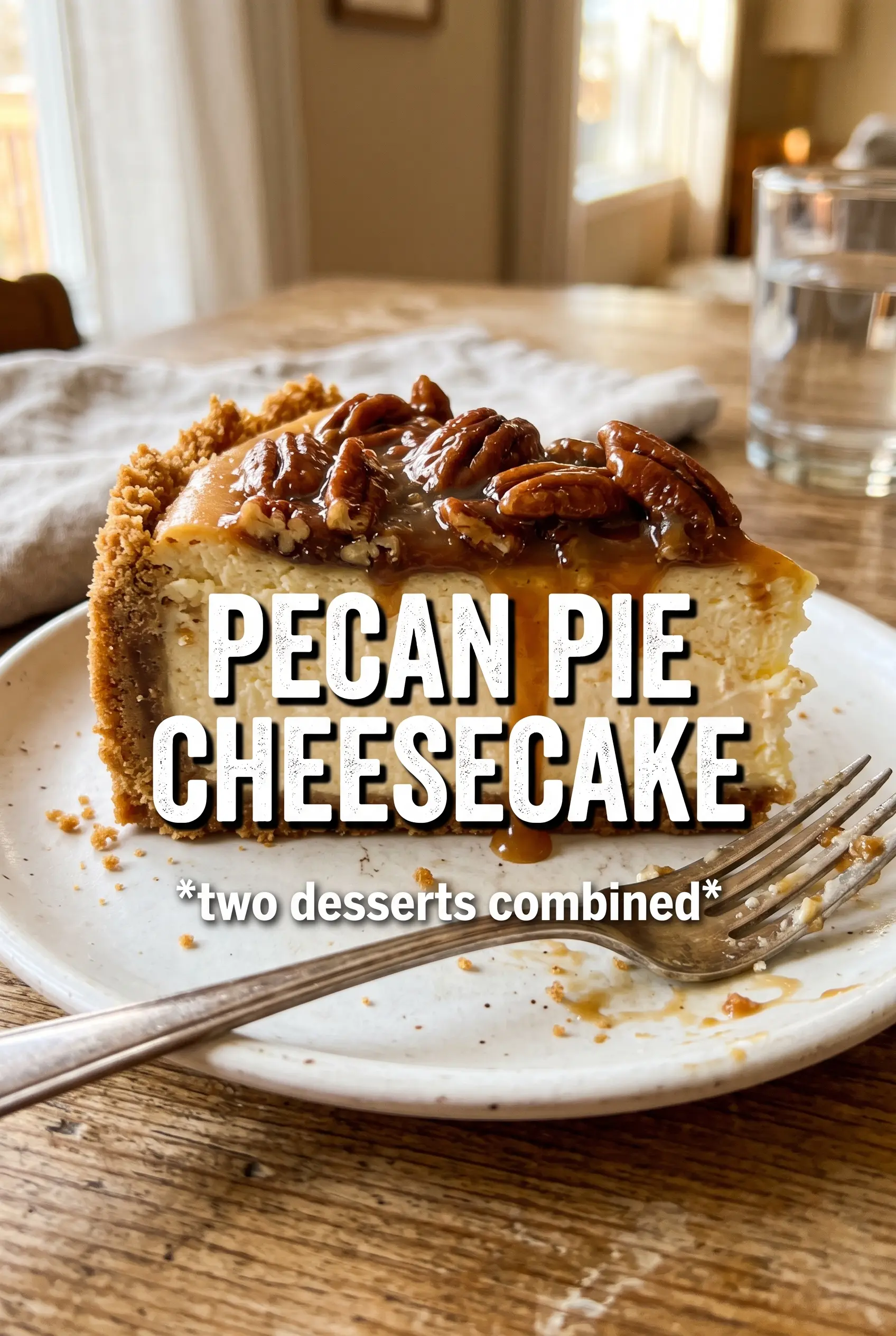
The cheesecake came out silky and the pecan topping set up just enough to slice cleanly without running all over the plate. I chilled it overnight and the crust stayed crisp under all that filling.
Like this pecan pie cheesecake? Save it to Pinterest for the holiday dessert that slices clean, chills beautifully, and finishes with glossy pecans on top.
The Water Bath Is What Keeps the Center Creamy
Pecan pie cheesecake has two places where things usually go wrong: the cheesecake overbakes, or the topping gets too loose and slides off the slice. The water bath fixes the first problem by holding the oven heat gentler and more evenly around the pan. That matters here because cream cheese filling goes from smooth to dry faster than people expect, especially once eggs are involved.
The other piece is the cool-down. A cheesecake that looks done in the oven can still be setting in the middle, and if you cut it too soon, the filling won’t hold its shape. Let it cool fully before it ever touches the fridge, then give it the full chill time. That extra patience is what gives you those clean slices with the topping sitting neatly on top instead of sinking in.
- Cream cheese — Use full-fat blocks, not the spreadable tub kind. Blocks whip smooth and bake into that dense, classic cheesecake texture; tub cream cheese often gives you a softer, wetter filling.
- Sour cream — This adds tang and keeps the filling from tasting heavy. If you need a swap, use full-fat plain Greek yogurt, but expect a slightly sharper finish.
- Brown sugar — It belongs in both the filling and the topping because it brings molasses depth that white sugar can’t match. Light or dark both work, though dark brown sugar gives the topping a deeper caramel note.
- Corn syrup — It’s here for shine and a smoother topping texture. You won’t taste it outright, but it helps the pecan layer stay glossy instead of crystallizing as it cools.
What Each Ingredient Is Actually Doing in This Recipe
- Primary ingredient (the star) — Quality matters most. Choose the best you can find.
- Cooking medium (oil, butter, or broth) — This carries flavors and prevents dryness.
- Seasonings (salt, pepper, spices, herbs) — Layer flavors so nothing overpowers. Build depth gradually.
- Aromatics (garlic, onion, herbs) — Cook with fat to bloom flavors. Become the foundation.
- Supporting ingredients — Complement the main ingredient without overpowering it.
- Sauce or liquid (if applicable) — Brings flavors together. Balance richness with acid.
- Acid (lemon, vinegar, wine, or other) — Brightens and prevents flat-tasting results.
- Final finish (garnish, glaze, or sauce) — Prevents one-dimensional taste and adds visual appeal.
Building the Layers Without Breaking the Filling
Pressing and Prebaking the Crust
Mix the graham crumbs, brown sugar, and melted butter until every crumb looks damp, then press the mixture firmly into the bottom of the springform pan. You want an even layer with a compact edge so it doesn’t crumble when you slice the cheesecake. The 10-minute bake is there to set the crust before the filling goes in; if it goes in raw, the bottom can turn soft under the cheesecake.
Mixing the Cheesecake Batter Gently
Beat the cream cheese and brown sugar until the mixture looks completely smooth before adding anything else. That is the stage that prevents lumps, and once the eggs go in, you don’t want to chase smoothness with more mixing. Add the eggs one at a time, then stop as soon as the batter looks uniform. Overbeating pulls in air, and air is what gives you cracks and a puffy top that falls later.
Baking Until the Center Still Moves Slightly
Pour the batter over the crust and bake until the outer edges are set but the center still has a small wobble when you nudge the pan. That jiggle tells you the cheesecake is done enough to finish setting as it cools. If the whole surface is firm in the oven, it’s already gone too far. Pull it out, cool it completely on the counter, then chill it for the full six hours so the texture turns dense and sliceable.
Cooking the Pecan Topping to the Right Thickness
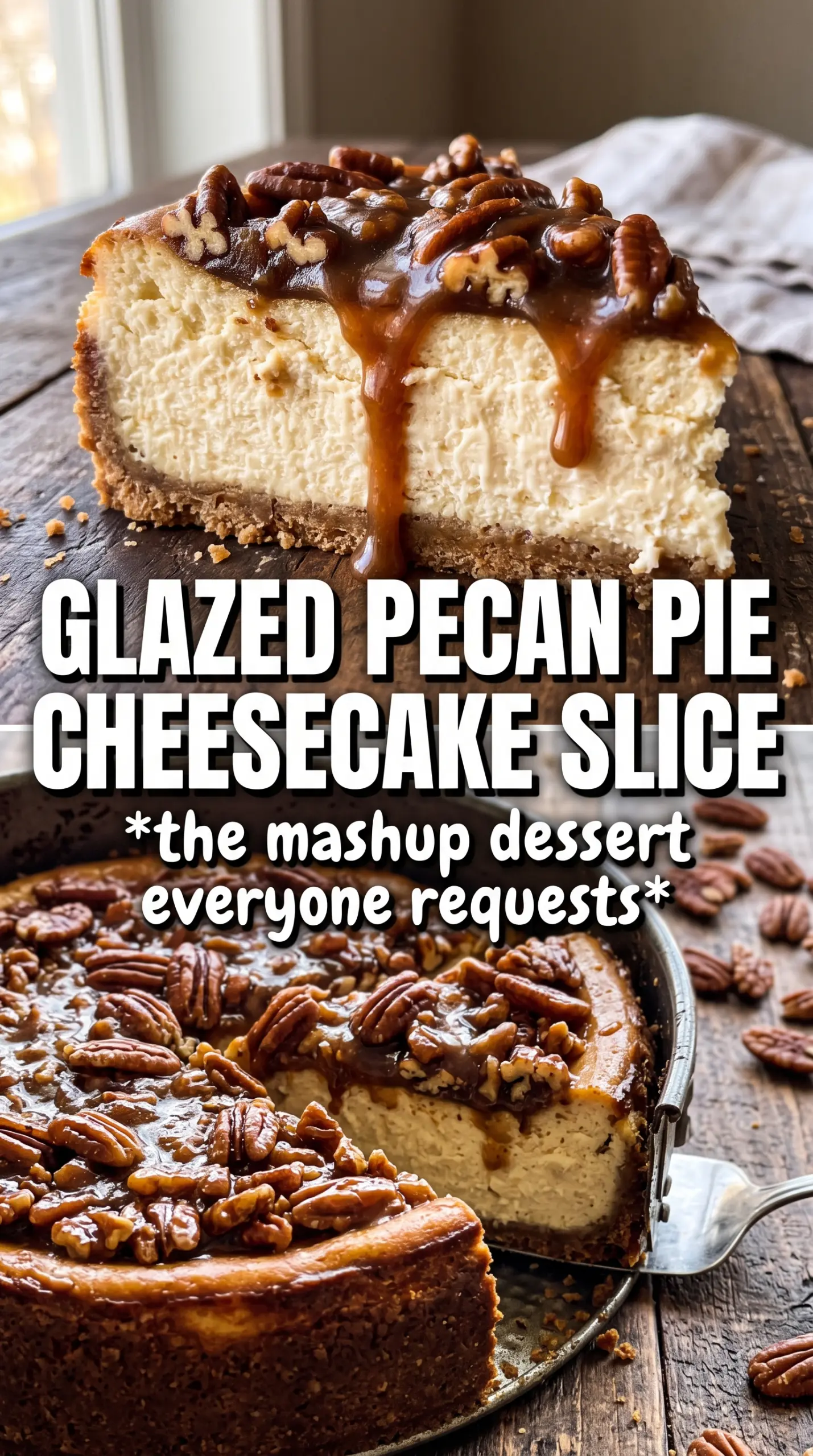
For the topping, melt the butter with the brown sugar, cream, and corn syrup over medium heat and let it simmer for three minutes. You’re looking for a bubbling mixture that thickens slightly and turns glossy, not a hard boil that makes the sugar gritty. Stir in the pecans, vanilla, and salt off the heat, then cool it for about 15 minutes before spooning it over the cheesecake. That short rest keeps it from running everywhere while still letting it spread in a thick layer.
How to Change It Without Losing the Texture
Gluten-Free Crust Swap
Use gluten-free graham-style crackers or gluten-free cookie crumbs in the crust. The filling and topping are already gluten-free, so this swap keeps the dessert almost unchanged, with the same buttery base and sticky pecan finish.
No Corn Syrup in the Topping
Use honey or maple syrup in the same amount if you don’t keep corn syrup on hand. The topping will taste a little more distinct and may set a touch less glossy, but it will still coat the pecans and slice cleanly once chilled.
Make-Ahead for a Crowd
Bake and chill the cheesecake a day ahead, then add the pecan topping a few hours before serving or just before it hits the table. That keeps the topping glossy and prevents the nuts from softening the top layer of the cheesecake.
Dairy-Light Adjustment
You can use full-fat dairy-free cream cheese and plant-based butter, but the texture will be a little softer and the tang less pronounced. The topping will still work, though the finished cheesecake won’t have quite the same dense, classic bite as the original.
Storage and Reheating
- Refrigerator: Store covered for up to 5 days. The crust softens a little over time, but the flavor stays excellent.
- Freezer: Freeze the cheesecake without the topping for best results, tightly wrapped, for up to 2 months. Thaw overnight in the fridge, then add the pecan topping after thawing.
- Reheating: This dessert is best served cold or cool. Don’t microwave it; that melts the topping and ruins the cheesecake texture.
Questions I Get Asked About This Recipe
Pecan Pie Cheesecake
Ingredients
Equipment
Method
- Preheat the oven to 325°F, then press the graham cracker crumb mixture into a 9-inch springform pan to form an even crust layer.
- Bake the crust for 10 minutes, then remove and cool while you prepare the cheesecake batter.
- Beat the cream cheese and brown sugar until smooth, then add the eggs one at a time and mix until fully blended.
- Mix in the sour cream, vanilla, and cinnamon until the batter looks silky and uniform, then pour it over the baked crust.
- Bake the cheesecake in a water bath for 60–65 minutes at 325°F until the center is just set.
- Cool the cheesecake completely, then refrigerate for 6 hours to fully chill before topping.
- Melt the butter with the packed brown sugar, heavy cream, and corn syrup over medium heat until smooth.
- Simmer for 3 minutes, then stir in the whole pecans, vanilla, and salt.
- Cool the pecan topping for 15 minutes until thickened but still pourable.
- Pour the cooled pecan topping over the chilled cheesecake just before serving, letting it settle over the surface.